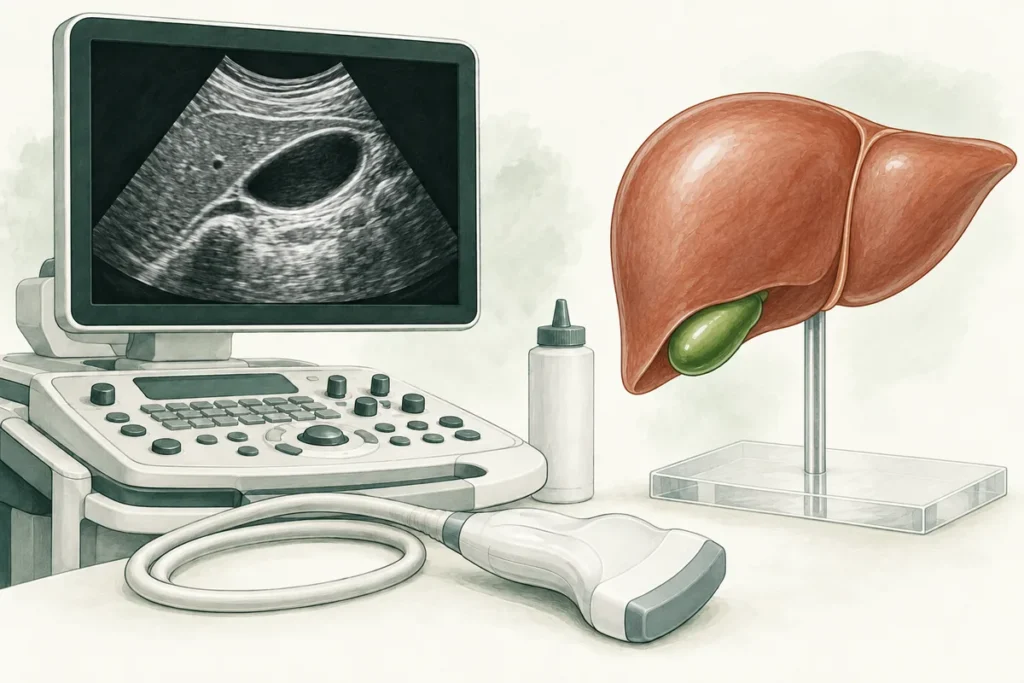
A stone can be found in a bile duct even after gallbladder removal. Cholecystectomy removes the organ that stores bile, but leaves the ducts carrying bile from the liver to the intestine. Previous surgery therefore does not rule out a duct stone when new pain or jaundice develops. Equally, not every digestive symptom after surgery is caused by a stone.
Symptoms that need urgent care
Seek emergency assessment if upper abdominal pain occurs with fever, shaking chills or jaundice. Severe or worsening pain, repeated vomiting, confusion, fainting or marked weakness also need urgent attention. These can indicate bile duct infection, pancreatitis or another acute problem. Do not wait for a routine appointment or arrange your own blood tests before seeking help.
New yellowing of the eyes or skin, very dark urine or unusually pale stools requires prompt medical assessment even without severe pain. If surgery was recent, also inform the surgical team. A dangerous complication does not always produce every typical symptom. NIDDK explains warning symptoms of complicated gallstone disease.
Retained and recurrent stones
A retained stone was already present in the duct but was not detected or completely removed during earlier treatment. It may have moved out of the gallbladder before surgery. This finding alone does not establish that the operation was performed incorrectly: small stones are not always visible during the initial investigations.
A recurrent stone develops after a duct has previously been cleared. Poor bile drainage, duct anatomy, narrowing and infection can contribute. The number of months since surgery cannot reliably establish the origin of an individual stone. Previous imaging and procedure reports help the specialist understand what has changed.
The NHS includes retained stones among possible complications after cholecystectomy. Other explanations for pain include a bile leak, duct stricture, stomach disease or a pancreatic problem. Assessment should establish the cause rather than assume that every symptom has the same explanation.
How the ducts are investigated
The clinician asks about the pattern of pain, surgery date and any previous duct procedures. Liver blood tests and an abdominal ultrasound are usual starting points. Tests for inflammation or pancreatic injury may also be needed. One abnormal blood result does not prove that a stone is present, and an unremarkable ultrasound does not always exclude a small duct stone.
- MRCP is an MRI examination that shows the bile ducts without an endoscopic intervention.
- Endoscopic ultrasound, or EUS, examines the ducts from close by through the digestive tract and may clarify an uncertain finding.
- ERCP is generally used to treat a confirmed or strongly suspected obstruction rather than simply investigate any unexplained discomfort.
The order depends on clinical urgency. A serious duct infection may require urgent drainage. In a stable person, further imaging can help avoid an unnecessary invasive procedure. This approach is supported by ESGE guidance on common bile duct stones.
Treatment after gallbladder removal
Many stones can be removed during ERCP. An endoscope passes through the mouth to the duodenum, and instruments reach the duct through its natural opening. The procedure may involve cutting the sphincter, widening the opening or breaking up a difficult stone. The technique depends on the findings and individual risks.
ERCP can cause pancreatitis, bleeding, infection or perforation. Expected benefits, alternatives and personal risks should be discussed beforehand. If the duct cannot be completely cleared immediately, a temporary stent may be used to maintain drainage. A stent needs a documented plan for repeat treatment, exchange or removal; it should not be forgotten after symptoms improve.
Complex anatomy or unsuccessful endoscopic treatment may require another approach or referral to a specialist team. Diet changes, gallbladder “flushes” and remedies intended to stimulate bile flow cannot replace treatment of an obstruction. Do not try to manage suspected blockage with these measures.
Prepare for the next discussion
- Bring the discharge summary, operation report and any previous ERCP or stent details.
- Gather scan reports and images, plus blood results with dates.
- List medicines, especially blood-thinning treatment. Do not stop prescribed medicines yourself.
- Record when pain, vomiting, fever and changes in urine or stool colour began.
After treatment, ask whether duct clearance was confirmed, when blood tests should be checked and who will manage any stent. Read the broader explanation of common bile duct stones. When there are no emergency symptoms, the contact page provides a route for a planned enquiry.
Frequently asked questions
Does a new stone mean the gallbladder has grown back?
No. The bile ducts remain after surgery, and a stone can be present in those ducts.
Does a normal bilirubin result rule out a stone?
No. Timing, symptoms, other blood results and imaging must be considered together.
Will I need another operation through abdominal incisions?
Not necessarily. Endoscopic treatment is often possible, but the suitable approach is individual.
Can a particular diet guarantee that stones will not return?
No. Balanced eating supports general health but cannot eliminate every cause of duct stones. Follow-up depends on the treatment findings and your own risk factors.
This article provides general information and does not replace assessment and individual advice from a clinician.