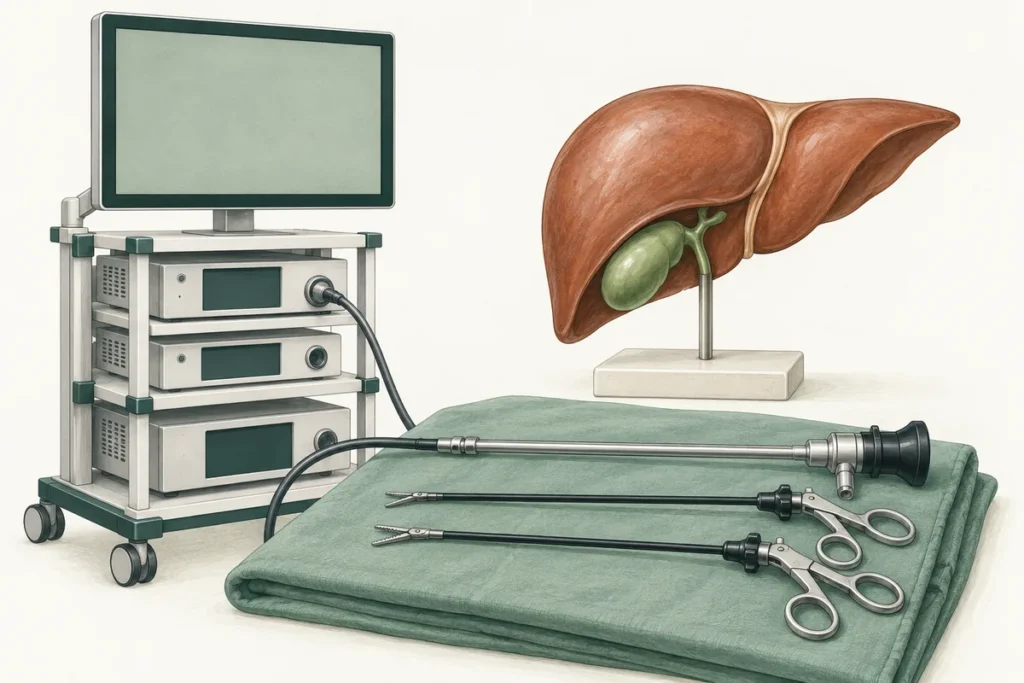
Gallbladder removal usually begins with a laparoscopic approach, using a camera and small incisions. Sometimes the surgeon changes to an open operation with a larger incision. This is called conversion. It can be a deliberate safety decision or a response to bleeding, injury or another problem. The word alone does not explain what happened, so ask for the specific reason in your case.
What changes during conversion?
The operation continues under the same anaesthetic, but the surgeon gains access through a larger abdominal incision, often below the right ribs. Conversion is different from an open operation planned before surgery. It is also different from slightly enlarging a small incision to remove the gallbladder.
The aim remains to treat the gallbladder problem, although what can safely be completed may change. For the usual operation and preparation, see our guide to laparoscopic gallbladder removal.
Why might a larger incision be needed?
According to SAGES patient information, reasons include severe inflammation, scarring, adhesions from earlier surgery, poor visibility and bleeding. Several difficulties may occur together:
- Inflamed or scarred tissue can make the gallbladder difficult to separate from surrounding structures.
- The surgeon may be unable to identify the ducts and blood vessels clearly enough to continue laparoscopically.
- Bleeding may require better access for control.
- An injury or another unexpected finding may require a different approach.
Having previous abdominal surgery does not automatically mean that open surgery will be necessary. Ultrasound and other preoperative tests help planning, but cannot show every adhesion or predict how tissue will separate during the operation.
Does conversion mean something went wrong?
Not necessarily. The surgeon may change access before an injury occurs because continuing by the original route is judged unsafe. In other cases, conversion follows a complication that needs treatment. Both situations deserve a clear explanation rather than reassurance based only on the term “conversion”.
A larger incision does not remove all surgical risks. The multi-society safe cholecystectomy guideline found insufficient evidence to recommend conversion itself as a proven way to prevent bile duct injury in difficult operations. Depending on the findings, alternatives may include additional imaging, help from another surgeon or subtotal removal, leaving part of the gallbladder. These are individual decisions, not interchangeable solutions.
What should be discussed before surgery?
Ask how likely a difficult operation appears in your situation and what options the surgeon would consider if anatomy is unclear. The consent discussion should cover possible conversion and its consequences, not just the expected small incisions. Tell the team about previous operations and bring available reports.
It is reasonable to ask: “If you cannot safely complete a standard removal, what would you do?” Also discuss who should receive an update after surgery and how a longer hospital stay could affect transport, work and help at home. Do not stop medicines or change fasting instructions yourself.
How can recovery change?
Recovery after an open incision usually takes longer than after uncomplicated laparoscopy. The American College of Surgeons describes differences in access, hospital care and risks. Your actual course depends on the reason for conversion, any additional treatment, general health and wound healing. A calendar estimate cannot replace your discharge plan.
- Ask for a pain-control plan that lets you breathe comfortably and move safely.
- Follow the team’s advice on walking, breathing exercises and blood-clot prevention.
- Check wound-care instructions and whether any stitches, staples or drain need an appointment.
- Agree when to resume driving, lifting, exercise and your particular type of work.
Light activity is usually increased gradually; a larger wound is not a reason to remain in bed without medical advice. Equally, feeling better does not mean the abdominal wall is ready for heavy lifting. Do not use the recovery timetable of someone who had straightforward keyhole surgery as your target.
What should you know before discharge?
Ask why conversion was needed, whether the gallbladder was removed completely and whether a complication occurred. Find out whether further tests or procedures are planned. Keep the discharge summary and the contact number for postoperative concerns. If you leave with a drain, obtain specific instructions about care and when to seek help.
When should you seek urgent help?
Contact the surgical team urgently for worsening or severe abdominal pain, fever or chills, jaundice, repeated vomiting, inability to drink, or increasing wound redness or discharge. New chest pain, difficulty breathing or collapse requires emergency care. Do not wait for a routine appointment. These warning signs are consistent with NHS postoperative advice.
Frequently asked questions
Can conversion always be predicted?
No. Tests and the medical history identify some difficulties, but the final decision may only be possible once surgery starts.
Is conversion proof of a surgical error?
No. It may be precautionary or follow a complication. Assessment requires the findings and operative record, not the incision size alone.
Will I definitely need another operation?
No. Conversion often allows treatment to continue during the same operation. Further procedures depend on the findings and recovery.
Can I request that the surgeon never convert?
Discuss your concerns before surgery. An absolute restriction may prevent necessary treatment if unexpected problems arise, so the risks and alternatives need an individual conversation.
For a planned discussion, contact the surgical team and bring your investigation results. This information supports, but does not replace, an individual consultation.