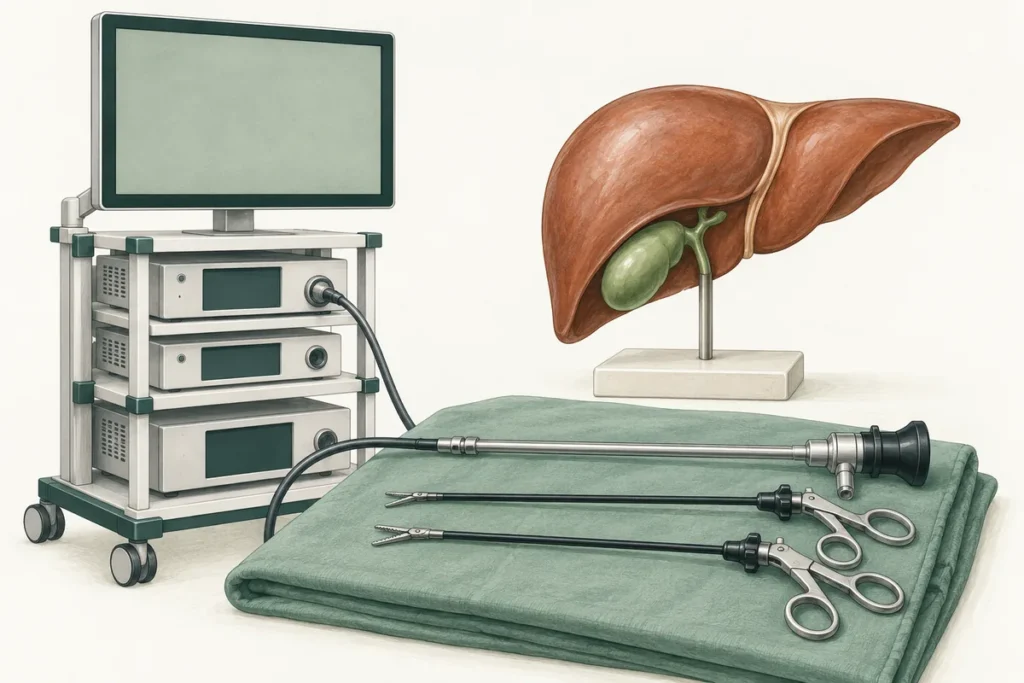
Laparoscopic cholecystectomy removes the gallbladder through several small incisions in the abdomen. It is recommended for medical reasons, such as gallstones that cause pain or complications. When surgery is needed, there is no requirement to try every possible medicine first. The liver continues producing bile after the gallbladder is removed, so food can still be digested. You may need temporary changes to meals and activity while you recover, but a strict lifelong diet is usually unnecessary. Laparoscopy often allows a quicker return to everyday activities. Your surgeon assesses whether it is suitable for you and explains the expected benefits and possible risks.
Benefits of laparoscopic gallbladder removal
Compared with laparotomy, an open operation through a larger abdominal incision, laparoscopic removal can offer the following advantages and considerations:
- the operation uses smaller access incisions and generally causes less disruption to the abdominal wall;
- blood loss is often limited, although it depends on the complexity of the operation;
- small scars remain where the incisions were made, with their size and appearance depending on healing;
- recovery is often quicker, and some patients go home the same day or after an overnight stay, while others need longer care;
- the timing of return to work depends on the job, symptoms and recovery;
- pain can often be managed at home with the medicines prescribed at discharge, but some patients need additional assessment or treatment;
- adhesions and other complications can still occur, including bleeding, infection, bile leakage or injury to a bile duct or another organ.
Preparing for gallbladder removal
Preparation for laparoscopic gallbladder removal usually involves several steps:
- The patient discusses the symptoms and medical history with the clinician.
- The surgeon and anaesthetist choose investigations according to your symptoms and other health conditions. These may include a full blood count, biochemical tests, clotting tests, a urine test and ultrasound. If more information is needed, they may request MRI or MRCP, CT, an ECG, chest imaging, upper gastrointestinal endoscopy or infection tests. Existing heart, endocrine or other chronic conditions may call for review by the relevant specialist. The team will explain which tests you need and how the results will guide your surgical plan.
- The findings help establish the diagnosis and determine whether surgery is appropriate. The team discusses the proposed procedure, alternatives, risks, timing and arrangements, and the patient gives informed consent.
- Follow the hospital’s hygiene instructions and do not shave the operative area yourself; if hair removal is necessary, the team should arrange it appropriately. Follow the anaesthetist’s instructions for food, drinks and medicines including when to stop eating and drinking. Enemas or laxatives are not routine self-preparation. Tell the team about all regular medicines, supplements and allergies, and do not alter prescribed treatment without advice.
How laparoscopic gallbladder surgery is performed
Laparoscopic gallbladder removal is usually performed under general anaesthesia. The steps below explain what happens during a typical operation. The surgeon and anaesthetist adapt the sequence and techniques to the findings and the patient’s condition:
- The team checks the patient, consent and preparation immediately before the procedure.
- The anaesthetist gives the planned anaesthetic and monitors the patient throughout the operation.
- A tube may be used to remove stomach contents if needed. The anaesthetist decides whether this is appropriate for the patient. It is one possible measure within a wider plan to reduce vomiting and aspiration, which means stomach contents entering the airways; the tube alone cannot prevent every such event.
- During general anaesthesia, the anaesthetist keeps the airway open and supports breathing, usually through a breathing tube or another suitable device. The team monitors oxygen delivery and ventilation throughout the operation. Settings are adjusted when necessary, including to account for the effects of the gas introduced into the abdomen to create working space.
- The surgeon makes a small incision and places a port, which provides a channel for instruments. A laparoscope with a camera and light source is passed through it to show the area being operated on. Gas introduced into the abdomen creates working space. This helps the surgeon perform the procedure, while careful technique remains important to limit injury to nearby tissues.
- Additional small access incisions allow instruments to be introduced. Their number and position depend on the technique. If adhesions are present, the surgeon assesses and separates them as necessary and safe before proceeding.
- The surgeon examines the gallbladder and the structures around it. If the gallbladder is very swollen, some of its contents may be removed to make the next steps easier. Whether this is needed is decided during the operation.
- Once the relevant structures have been safely identified, the surgeon secures and divides the cystic duct and cystic artery. The cystic duct carries bile out of the gallbladder, while the artery supplies its blood. During a standard cholecystectomy, the main bile duct is preserved so that bile from the liver can continue to reach the intestine.
- The gallbladder is separated and removed through an access incision, often near the navel, using the approach judged appropriate by the surgeon.
- After removing the gallbladder, the surgeon checks the area for bleeding, bile leakage and other problems. Any bleeding is controlled using a method appropriate to its source. Irrigation and suction may be used if fluid needs to be cleared. The approach depends on the findings; washing the whole abdominal cavity with antiseptic is not a required part of a standard operation.
At the end of the operation, the instruments are removed, the gas is released and the incisions are closed with stitches or surgical glue. A drain may be placed if fluid needs to be monitored or removed. It is used for a specific clinical reason rather than routinely. If a drain is needed, the team explains how to care for it, what to watch for and when it is expected to be removed.
Possible symptoms after laparoscopic gallbladder surgery
Symptoms after surgery vary. Tell the team about problems, particularly the following:
- Pain around the incisions and in the abdomen can occur during the first few days. Take pain-relieving medicines according to your discharge instructions. Contact the team if pain is severe, increasing or not improving with the prescribed treatment, as its cause needs assessment.
- A raised temperature should be reported, especially if persistent or accompanied by chills, wound changes or worsening pain. It does not establish a diagnosis by itself, but may be a sign of infection or another complication.
Nausea, vomiting, bloating, bowel changes, heartburn or other digestive symptoms can also occur. Persistent or worsening symptoms require review. Yellowing of the skin or eyes, repeated vomiting, severe pain, breathlessness or marked deterioration warrants urgent medical assessment. Do not wait for a routine follow-up appointment with these symptoms.
Recovery after gallbladder removal
After anaesthesia, you are monitored in a recovery area and then moved to the ward if needed. The length of stay depends on how you feel and the details of the operation. Gentle movement begins as soon as it is safe, and prolonged bed rest is usually unnecessary. The team also explains incision care: dissolving stitches do not need removal, while other stitches are removed at a follow-up visit.
The team will tell you when to start drinking and eating. This depends on your recovery from anaesthesia, any nausea and the details of the operation. Begin with small amounts that you can tolerate comfortably and follow the instructions you are given.
Staff will help you get up and walk as soon as it is safe, sometimes on the day of surgery. Readiness to walk independently, eat and go home is assessed separately. Light everyday activities can often resume fairly soon, while full recovery takes longer, especially after complications or an open operation. Agree an activity plan based on your progress, rather than expecting every stage to fit a fixed two-day or one-week timetable.
Return to usual activities gradually. Ask when your wounds are ready for baths, swimming or sauna and when more strenuous activity is safe. Many people can return to suitable work after a relatively short recovery, but heavy physical work and sport may need longer. The clinician should help plan this around the actual operation and your symptoms.
Resume sexual activity when comfortable and in line with the surgeon’s advice. Avoid heavy lifting until the team says it is safe, then increase loads gradually rather than treating the restriction as permanent.
Food after gallbladder removal
Most people do not need a restrictive diet for the rest of their lives after cholecystectomy. The liver still produces bile, which reaches the intestine without being stored in the gallbladder. During early recovery, smaller meals may be easier to tolerate; later, aim for a normal balanced diet, adjusted for symptoms and other medical conditions.
Examples of foods that can form part of a balanced diet, according to tolerance, include:
- cereals and porridge, including buckwheat, rice and oats;
- fresh or toasted bread of a type that you enjoy and tolerate comfortably;
- fruit, such as bananas or apples;
- vegetables, including carrots, pumpkin, cucumber and potatoes, prepared in a way that suits you;
- pasta, including wholegrain varieties if tolerated;
- lean meat, fish or other suitable protein sources;
- eggs or an omelette, including both white and yolk if these are well tolerated;
- yoghurt, cottage cheese or other dairy foods if tolerated.
Fruit jelly, marshmallows, honey, preserves and other desserts can be enjoyed in moderation. Choose them according to your preferences and tolerance, keeping the overall amount of sweet foods in mind. They have no special treatment effect. If you have diabetes, food allergies or another condition, follow the relevant dietary advice as well.
Large fatty meals can cause discomfort, while fried foods or certain drinks may worsen symptoms. Choose broths, sausages, fresh baking, acidic fruit, cocoa, chocolate, onion, garlic, spices and boiled eggs according to your own tolerance and the balance of your overall diet. If a food causes discomfort, reduce the portion or try a different preparation method. Avoid alcohol when it interacts with medicines or conflicts with recovery advice. If you have liver or pancreatic disease, ask for specific guidance about food and drink.
Discussing treatment at the centre
During the consultation, the surgeon reviews the diagnosis, symptoms, investigation results and your overall health. This helps establish whether gallbladder removal is likely to benefit you and what risks it carries. An incidental stone, a digestive symptom or a lack of response to medicines does not determine the decision on its own. The recommendation is based on the complete assessment and discussed with you.
Before surgery, a specialist consultation and appropriate investigations are needed. Contact the clinic to confirm which assessments are available, who will see you and whether the consultation has a fee. Ask for a current written estimate showing the included services and any possible additional costs.
The likely cost can be discussed after assessment because it depends on the proposed procedure and other factors, including anaesthesia, investigations and the expected inpatient stay. Ask what is included and what additional charges could arise if the plan changes.
Questions and answers
It is an operation to remove the gallbladder through small abdominal incisions, using a camera and surgical instruments. The surgeon recommends it when there is a medical indication, such as stones that cause symptoms. If surgery is needed, you do not have to try every nonsurgical treatment first. Recovery is often quicker than after an open operation; bleeding, infection, bile leakage and other possible complications are discussed beforehand.
The operation often takes around an hour, but its length depends on anatomy, inflammation, adhesions and whether additional treatment is needed. Preparation, anaesthesia and monitoring after you wake up take extra time. The team explains the plan for your situation, including where you will be monitored, whether intensive care is necessary and when you may be ready to go home.
Follow the team’s dietary advice immediately after surgery, then gradually return to balanced meals. Smaller portions may be more comfortable at first. If a food causes symptoms, reduce the amount or try a different preparation method; boiling, baking and steaming are useful options. Most people do not need permanent restrictions on all fried, spicy, salty, hot or cold foods. Persistent pain, vomiting or diarrhoea should be discussed with a clinician so that the cause can be assessed, rather than continuing to narrow your diet.
Related reading: Laparoscopy for calculous cholecystitis · Recovery after gallbladder removal · Gallstones.