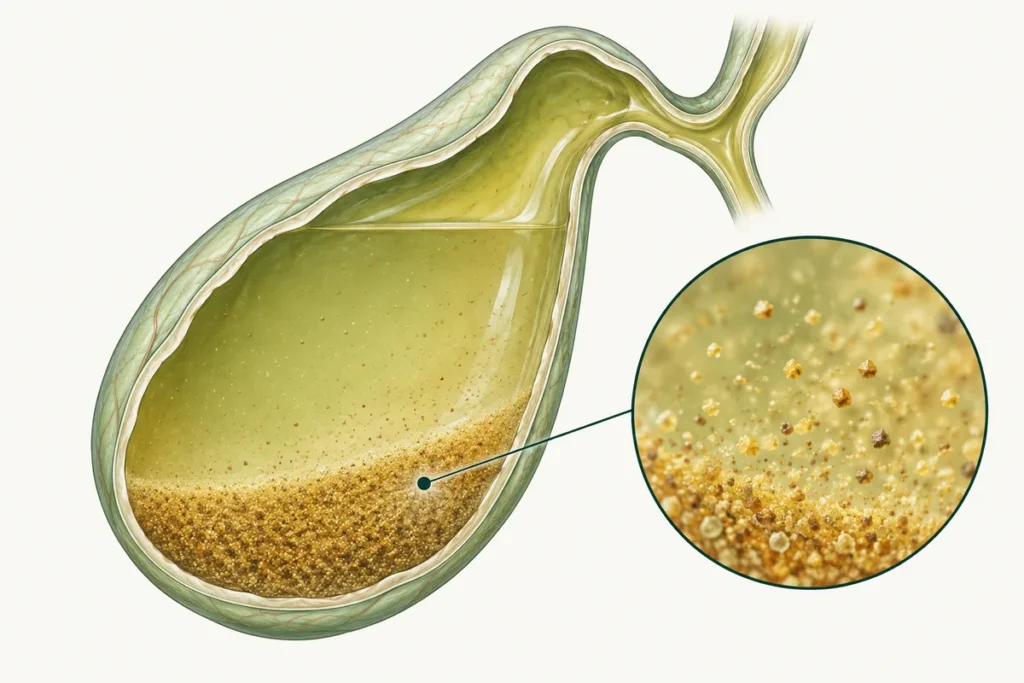
“Biliary sludge” is a term you may see on an ultrasound report. It describes sediment or suspended particles in bile and often raises a practical question: does this finding need treatment? The answer depends on your symptoms, why the sludge has developed and the condition of your gallbladder. Sludge may appear temporarily when bile drainage slows and clear when the cause resolves, or it may accompany another condition that needs assessment.
What is biliary sludge?
Sludge consists of small particles that can include cholesterol crystals, calcium salts and mucus. It is usually identified on ultrasound. Its significance varies from person to person: symptoms, possible causes and the condition of the gallbladder all matter. Sludge may disappear when an underlying cause resolves, or it may be associated with gallstones and complications. The word “sludge” on a report alone cannot predict what will happen next.
Different patterns may be described according to the appearance of the gallbladder contents:
- Microlithiasis: very small stones or particles that may move when body position changes;
- Thick, putty-like bile deposits whose movement is assessed on ultrasound;
- A combination of thick deposits and microlithiasis.
According to the circumstances in which it develops, sludge may be described as:
- Primary sludge, when no clear underlying condition or trigger is identified;
- Secondary sludge, occurring alongside other conditions such as pancreatitis, gallstone disease or rapid weight loss.
Possible causes
To explore why sludge has developed, a clinician asks about food intake, weight changes, previous operations, medicines and long-term health conditions. The following circumstances may be relevant during that assessment:
- Restrictive diets and rapid weight loss;
- Surgery involving the stomach or intestines;
- Certain antibiotics and other medicines;
- Sickle cell anaemia, an inherited haemoglobin disorder in which red blood cells may become sickle-shaped and break down more quickly;
- Previous organ transplantation;
- Liver conditions, including inflammation and cirrhosis;
- Pancreatitis, whether or not it is related to alcohol;
- Coexisting conditions affecting nearby organs;
- Previous treatment to break up gallbladder or bile duct stones;
- Gallstone disease;
- Liver cirrhosis, including cirrhosis caused by chronic hepatitis;
- Prolonged intravenous nutrition;
- Diabetes.
Factors that may increase the risk of bile stasis or gallstone disease include:
- Older age;
- Female sex;
- Family history;
- Excess body weight;
- An unbalanced diet.
Symptoms of bile stasis and sludge
Many people learn they have sludge during an ultrasound arranged for another reason and feel entirely well. If symptoms are present, they need to be considered alongside the investigation results. The complaints below can also occur with other conditions:
- Pain below the right ribs. It may worsen after meals, remain persistent, or occur in episodes of varying intensity;
- Reduced or absent appetite;
- Nausea during the day;
- Vomiting, sometimes containing bile, including after meals;
- Heartburn;
- Changes in bowel movements.
Treatment of bile stasis and sludge
Treatment is chosen after reviewing your symptoms, the likely cause of the sludge and the condition of the gallbladder. Food choices should reflect tolerance; the traditional “Diet No. 5” can be discussed but is not required for everyone. Fasting and excessive fat restriction may be inappropriate. Pain relief may be needed when symptoms occur. Ursodeoxycholic acid has specific clinical uses and should be prescribed for a clear indication, rather than as a liver-cleansing product. Repeated attacks, inflammation or other complications may lead to discussion of gallbladder removal. If sludge is found incidentally without symptoms, the first step is to decide whether monitoring is needed, rather than assuming that surgery is necessary.
Regular, balanced meals and gradual weight management, where appropriate, can help reduce risk. Avoid excessive alcohol. Bring a list of your medicines to the appointment, as some can affect bile flow, but continue prescribed treatment unless your clinician advises a change. Existing liver disease and other health conditions also need to be considered in the overall care plan.
Book a consultation
An incidental sludge finding can be discussed at a planned consultation. The clinician can examine you, review any symptoms and arrange further investigations if needed. Severe or prolonged pain, fever, jaundice or repeated vomiting require urgent medical attention. Ask about booking arrangements, fees and any available free consultation on +380953566412; do not wait for a routine appointment if warning symptoms develop.
Questions and answers
Even when you feel well, it is useful to show the ultrasound report to a clinician and discuss why sediment may have formed. The assessment helps clarify whether monitoring or treatment is appropriate and which changes in your symptoms should prompt another review.
Why does bile become stagnant in the gallbladder?
Bile can become stagnant when the gallbladder does not empty fully or when bile composition changes. Possible circumstances include prolonged fasting, rapid weight loss, certain medicines and other illnesses, including liver conditions. The consultation brings these details together with your symptoms and investigation results. This helps identify a likely cause without attributing every case solely to alcohol or food choices. Symptoms determine how urgently assessment is needed.
What should I do if bile stasis or sludge is found?
Show the investigation results to a specialist and explain how you have been feeling. The clinician can explore the cause, assess associated conditions and explain whether you need further tests, monitoring or treatment. Ask which changes should prompt another appointment. Confirm current diagnostic costs, any free initial consultation, discounts for pensioners or people with disabilities, and available instalment arrangements directly with the clinic.