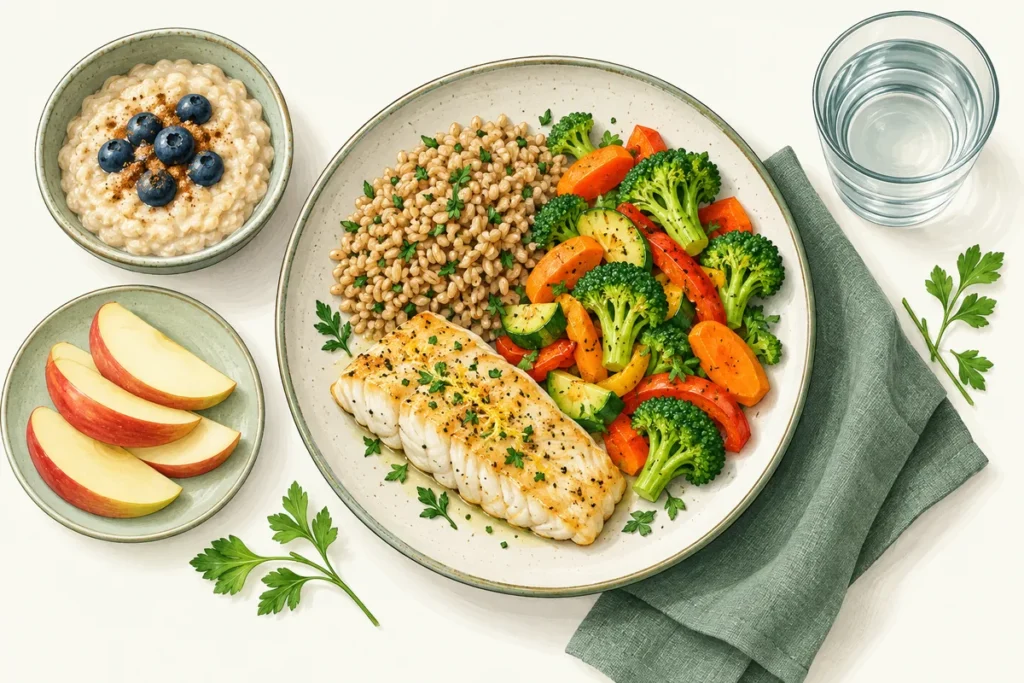
With cholecystitis, inflammation of the gallbladder often associated with stones, nutrition is an important part of supportive care. It does not replace treatment for acute inflammation, cholangitis or blocked ducts. With chronic symptoms or functional disorders, the diet is individualized. Fiber and other nutrients should be adequate and adjusted to tolerance.
Diet for cholecystitis
Dietary changes in cholecystitis aim to make meals more comfortable while maintaining adequate nutrition. The traditional Diet No. 5 restricted fatty, spicy and fried dishes and sometimes called for grating or puréeing food. In current practice, each restriction is considered individually. If ordinary solid food is well tolerated, there is no need to convert the whole diet to soft or puréed meals.
Even when restrictions are needed, the diet should provide enough energy, protein, vitamins and other nutrients. Boiling, stewing and steaming can be convenient, but they are not the only acceptable methods: baking and other techniques with moderate fat may also suit you.
Meals can be enjoyable and affordable. Appealing presentation and flavor help maintain appetite and an adequate intake.
Why dietary advice is given
The main goal is to find foods that are well tolerated while providing the nutrients your body needs. Vegetables, fruit and whole grains can help supply fiber. Dietary advice forms part of the overall care plan, while treatment for the diagnosed liver or gallbladder condition continues according to the clinician’s recommendations.
Dietary changes may ease particular symptoms and help maintain a healthy weight. If bile drainage is impaired, its cause needs investigation and treatment. The effect of diet is therefore considered alongside your overall condition: even well-chosen meals cannot rule out further attacks or complications.
General dietary principles
Protein, fat, carbohydrate and energy needs depend on age, body weight, activity and other health conditions. The amount of each component is chosen for the individual. Excess salt and free sugars are limited while a moderate amount of fat remains in the diet. A dietitian can help if weight is being lost or many foods have had to be excluded.
Practical suggestions to adapt to your tolerance and clinical advice:
- eat regularly; if large meals cause pain, try smaller portions;
- limit very salty foods for general health;
- drink enough fluid for your individual needs; a two-liter target should be discussed with the clinician if heart or kidney disease requires fluid limits;
- do not use alcohol as treatment; suitability depends on your health and medicines, and alcohol should be avoided with pancreatitis;
- choose a comfortable temperature and avoid scalding-hot food;
- include plant foods daily according to tolerance;
- use moderate amounts of vegetable oil in salads and when cooking, choosing preparation methods that you tolerate well;
- reduce very fatty fried dishes and rich broths if they trigger symptoms;
- remove visible fat and poultry skin when helpful; sinew, membranes and cartilage can be trimmed for texture.
Diet for chronic cholecystitis
During a stable period, aim for varied, balanced meals with enough protein and fiber and a moderate amount of fat. This supports general health and adequate nutrition. The condition of the biliary system and the cause of any continuing symptoms are assessed separately by the clinician.
Limit saturated fat while keeping a moderate amount of fat in the diet. Meat can be boiled, steamed or baked. Whether to remove a crust, purée high-fiber foods or change how vegetables are cooked depends on your symptoms. Foods that are well tolerated can often be kept in their usual form.
The following foods can be included according to tolerance. If duct blockage is suspected, seek assessment first; food should not be used to try to stimulate or “flush” bile flow:
- salads made with raw or cooked vegetables and a little unrefined oil;
- berries and fruit;
- porridge made from different grains.
Whether to limit the following foods depends on how you feel after eating them and on the overall nutrition plan:
- acidic greens containing oxalic acid, such as sorrel;
- spices, aromatic herbs and citrus fruit;
- sweet enriched pastries;
- very fatty, rich dishes;
- foods high in saturated fat;
- sweets high in added sugar;
- alcohol, considering other conditions and medical advice.
The duration of dietary changes depends on your condition and symptoms. When stones are present, the clinician also considers whether they are causing problems. Eggs, butter and other foods containing fat are tolerated differently, so restrictions are tailored and reviewed as recovery progresses. With symptomatic stones, diet remains part of care alongside treatment directed at the underlying problem.
Eating during a flare-up
If you suspect acute cholecystitis, seek medical assessment first, particularly for severe pain, fever, jaundice or vomiting. The care team decides whether food and drink should be restricted temporarily; fasting should not be started independently. Tea, diluted juice and rosehip infusions can only fit within the agreed plan and do not replace the investigation or treatment that is needed.
During recovery, soft dishes associated with Diet No. 5B may sometimes be useful. The clinician advises when eating can begin and the appropriate amount, based on your condition and treatment plan. Changes between eating patterns depend on tolerance, while the medical treatment of acute inflammation continues alongside dietary care.
Energy, protein, fat, carbohydrate, salt and fluid intake are individualized. Soft or puréed food may be useful when needed. Avoid nutritional deficiencies and do not impose restrictions without a clinical reason.
Examples of soft foods from Diet No. 5B, if approved and tolerated, include:
- puréed soups;
- well-cooked rice, oatmeal or semolina porridge;
- compotes, vegetable purées and jelly made with puréed fruit.
Diet No. 5A uses warm, finely textured food and limits fatty, fried, smoked or very salty dishes, alcohol, fizzy drinks, strong tea and sweets. A clinician adapts this approach to the patient’s needs, clarifying the amount of fat and whether vegetables need to be puréed. Where a restriction is unnecessary for the condition or tolerance, greater variety can be maintained.
Once eating is appropriate, lean meat and fish, rusks, fermented dairy of a suitable fat content, omelets and vegetable soups may be introduced gradually. Milk can be added to porridge if tolerated.
Return to a balanced usual diet according to tolerance. After an acute episode, agree substantial changes with the care team; there is no single timetable for everyone.
Meal timing
A convenient, regular routine can make meals easier to organize. If smaller portions are more comfortable, food can be divided into five or six meals at intervals of about three to four hours. Frequency is chosen around your symptoms and daily routine. This may be a useful eating pattern, while any problem with bile drainage still needs its own assessment.
Practical habits:
- try to keep convenient, regular meal times;
- avoid overeating while still getting adequate nutrition;
- when hungry, choose a suitable snack, such as kefir if tolerated;
- drink water regularly within any personal fluid limits;
- avoid unnecessary meal skipping;
- limit foods that clearly trigger symptoms without imposing excessive lifelong bans.
Foods to include or limit
Examples of foods that may fit the diet:
- baked or boiled fish as a protein source;
- lean meat;
- vegetable soups, puréed if needed;
- porridge and flakes made from different grains, including buckwheat, oats and rice; pearl barley and millet can also be chosen according to tolerance;
- rusks and wholegrain bread, fresh or toasted as preferred;
- cottage cheese on its own or in a casserole;
- omelets and other egg dishes; the amount, including whether more than one egg a day is suitable, is considered individually;
- dairy of a suitable fat content; condensed milk contains considerable sugar and should be limited;
- weak black, green or herbal tea, coffee if tolerated, kissel and unsweetened compote; juice in moderation;
- mineral water with attention to its composition and medical advice if other restrictions apply;
- tomatoes, carrots, cucumbers, beetroot, pumpkin and potatoes as tolerated;
- courgettes as one option for puréed soup;
- broccoli and carrots for vegetable purée;
- aubergines prepared with moderate fat; portion size and any need to limit them depend on symptoms after eating;
- pasta;
- a small amount of unrefined oil in salads;
- zephyr sweets, fruit pastila or honey in moderation, without any special therapeutic benefit;
- melon, bananas, watermelon, apples and pears as part of a varied fruit intake.
Foods to limit or assess for individual tolerance:
- fatty meat, processed meat products and some offal;
- very fatty or salty fish dishes, including cured and dried fish; other seafood is assessed according to preparation, portion size and tolerance;
- very fatty, rich or heavily spiced broths;
- crisps, hot dogs and deep-fried potatoes because of their fat and salt content;
- sorrel, dill, shallots, parsley and coriander if they cause discomfort; herbs that are well tolerated can remain part of the diet;
- mushrooms if they cause discomfort; any restriction depends on how the particular dish is tolerated;
- beans, green peas, chickpeas, lentils and maize if they cause bloating; these can be part of a healthy diet;
- large portions of butter and high-fat dairy; smaller amounts can be fitted within the agreed overall fat intake;
- canned foods high in salt or fat, pickles, smoked foods and marinades;
- hot seasonings, mustard, sauces and horseradish according to tolerance;
- acidic fruit and drinks made from it if they trigger symptoms;
- onions, daikon, chili peppers and garlic if poorly tolerated; portion size and preparation are assessed individually;
- alcohol and dishes or cocktails containing it, considering health conditions, medicines and clinical advice;
- energy drinks, very sugary fizzy drinks and other stimulant beverages;
- large portions of chocolate, confectionery, desserts and rich pastries; their amount is adjusted as part of a balanced diet and according to tolerance;
Adequate meals can be made from familiar, affordable foods. Vegetable soup, for example, is a simple option for one meal. Include other suitable dishes as well, so the menu stays varied and provides enough energy, protein and other nutrients rather than relying on one supposedly ideal food.
You can discuss personalized nutrition and treatment with the center in Kyiv. Stones and chronic inflammation are associated with gallbladder cancer risk, but overall risk is low and most people with stones never develop it. A clinician can assess individual risk.
Sample menu
Planning a week of meals helps organize ingredients, dishes and costs. The table offers a full seven-day example for a stable period. During an acute attack, food and drink should be agreed with the treating team. For everyday use, adapt portions, energy, protein, drinks and sweets to your needs and tolerance so that the overall intake is adequate for you.
| breakfast | mid-morning snack | lunch | afternoon snack | dinner | |
|---|---|---|---|---|---|
| 1 | milk and pasta soup, coffee, rusks | cottage cheese, banana | mashed potatoes, steamed meat patties, rosehip tea | zephyr sweets | oatmeal with raisins, diluted juice, plain biscuits |
| 2 | casserole with dried apricots, coffee with milk | baked apple with honey | boiled chicken, puréed soup, compote | vegetables with olive oil, rusks | steamed meat patties, pasta, vegetable juice |
| 3 | milk and buckwheat soup, herbal tea | fruit salad with honey dressing | baked fish, vegetables with sunflower oil | rosehip tea, plain biscuits | broccoli omelet, compote, rusks |
| 4 | semolina porridge, coffee with milk | yogurt | beef roulade, rice porridge, stewed vegetables | kissel, rusks | boiled turkey, beetroot vinaigrette salad, herbal tea |
| 5 | broccoli omelet, coffee | grated carrot with honey | stewed beef, puréed soup, fruit juice | plain yogurt, baked apple | semolina porridge, fruit juice |
| 6 | cottage cheese with honey, green tea | a handful of dried fruit | boiled chicken, vegetables with linseed oil, compote, rusks | kefir, pear | baked fish, rice porridge, rosehip tea |
| 7 | milk and pasta soup, herbal tea | cottage cheese, pear | steamed meat patties, buckwheat porridge, stewed vegetables | fruit pastila | boiled chicken, mashed potatoes, vegetables with olive oil |
Meals for chronic cholecystitis can remain varied and affordable. Familiar foods that are well tolerated can usually be selected without seeking separate approval for every dish. Discuss new symptoms, weight loss or major dietary restrictions with a clinician. A professional can help adapt the menu to your health, nutritional needs and budget.
Nutrition consultation
If choosing an adequate diet is difficult, ask a clinician or dietitian for help. The aim is to identify foods that cause discomfort and adjust the menu without excessive restrictions. A single poorly tolerated meal is considered alongside the response to treatment as a whole. Severe pain, fever, jaundice or vomiting needs medical assessment for possible complications.
At the Kyiv clinic, you can discuss food tolerance, a personalized eating plan and treatment costs. Confirm the appropriate specialist and availability of a free consultation at +380953566412. The historical Diet No. 5 can be adapted to current advice and your individual needs.
Questions and answers
Choose well-tolerated foods that provide adequate nutrients: meat or other protein sources, fish, dairy or alternatives, vegetables, fruit, grains and moderate amounts of oil. The purpose is good nutrition; impaired bile drainage needs separate assessment rather than attempts to stimulate it with particular foods.
A flare-up first needs clinical assessment. The clinician will explain whether you can eat and drink, based on severity and the treatment plan; do not start fasting yourself. Once eating is appropriate, porridge, puréed soups and rusks may be suitable. The pace of dietary progression, including use of Diet No. 5B dishes, depends on tolerance rather than a fixed third or fourth day.
Usually, reduce foods that provoke symptoms as well as excess fatty fried food, salt and added sugar. Fat, acidic fruit, herbs and spices are assessed individually, with the aim of keeping meals varied and nutritionally adequate within your tolerance.
Yes, if it is well tolerated. Plain yogurt with a suitable fat content and little added sugar is a convenient choice. For flavored products, consider the full ingredients and your response to the food rather than judging suitability by flavoring alone.
Ordinary or wholegrain bread, rusks and plain biscuits may suit you. Choose fresh or toasted bread according to tolerance and how it fits within the overall diet.
Usually, if eggs are well tolerated. The amount and preparation are considered alongside the overall diet and any other health conditions; limiting intake to one egg a day is not necessary for everyone.
Choose cheese with a suitable fat content and portion size. Check the fat and salt on the label for feta and Adyghe cheese, as these vary between products. Hard cheese can also fit the diet if well tolerated.
Manuil Pevzner’s Diet No. 5 and variants such as No. 5B were traditionally used for cholecystitis. These names can still provide a starting point for discussing meals, while the actual diet is tailored to the patient’s condition, nutritional needs and tolerance.
Yes, if it is well tolerated. Lower-fat or lactose-free milk may be appropriate when needed; the suitable fat content is chosen as part of the overall nutrition plan.
Yes, if tolerated. Fat content and portion size are individualized.
Usually, according to tolerance. Weak tea, rosehip infusion or chicory may suit you. For herbal blends, check the ingredients, possible allergies and interactions with your medicines separately; a clinician can help you choose a suitable drink.
Related reading: Medicines for cholecystitis · Acute cholecystitis · Gallbladder pain.