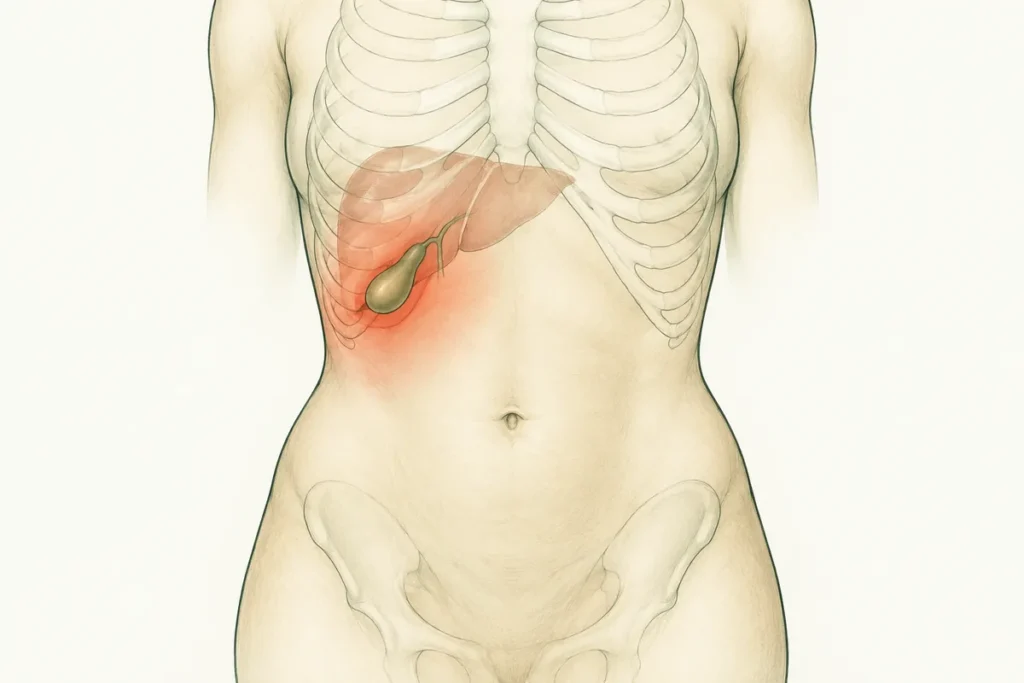
Pain around the gallbladder can have several causes. Understanding its common features can help you describe your symptoms to a clinician and recognize the warning signs that need urgent medical attention.
Abdominal pain occurs in many different conditions. It may come from the digestive organs, other organs or the nervous system, and can sometimes be felt away from its actual source. New or severe pain therefore needs assessment even if it began during a stressful period: the circumstances of its onset alone are not enough to establish a diagnosis.
At a consultation, the clinician asks about your symptoms, examines you and arranges the tests needed to clarify the cause. These findings guide the next step, which may involve observation, medicines or surgery.
Gallbladder pain: symptoms
The location and intensity of pain in the gallbladder area depend on its cause. The sensation alone cannot establish a diagnosis.
Functional biliary disorders may cause dull, aching or sharp pain below the right ribs. Stones and other diseases must be excluded when investigating these complaints.
The following symptoms may accompany the pain. They occur in several conditions, so the clinician considers them alongside the examination findings. An irregular heartbeat or other unusual symptoms also need assessment in their own right:
- a bitter taste in the mouth;
- abdominal bloating and gas;
- nausea;
- constipation or diarrhea;
- a sensation of an irregular heartbeat;
- weakness;
- sleepiness or insomnia;
- headache.
Pain may occur in episodes, after meals, occasionally after exertion, or without an obvious trigger.
Gallstones may cause biliary colic: severe pain under the right ribs or in the upper abdomen that can spread to the right shoulder or back. Despite the word “colic,” pain is often steady during an attack. Radiation to the neck is less typical and warrants consideration of other causes.
Possible associated symptoms include:
- a bitter taste, nausea or vomiting;
- dark urine and pale stools, particularly when bile flow is obstructed;
- loss of appetite; unexplained weight loss requires separate investigation.
A stone blocking a bile duct can cause jaundice. This requires urgent medical attention.
The intensity of pain in acute cholecystitis can vary. Older adults and people taking certain medicines may have less noticeable symptoms even when the illness is serious. Abdominal pain, fever and an increased white blood cell count are common findings. Some infectious complications also cause bacteremia, meaning bacteria in the bloodstream. This is assessed separately; it does not have to be present for a diagnosis of cholecystitis to be made.
Chronic cholecystitis may involve recurrent episodes of marked or aching pain. Besides the right upper abdomen, pain may be felt in the epigastrium and spread to the right shoulder blade, shoulder or collarbone. Left-sided pain is less typical and requires consideration of other causes.
Digestive symptoms are sometimes accompanied by a coating on the tongue, including a yellow-brown coating. Its color is considered alongside other complaints, but examination and appropriate tests are needed to determine whether gallbladder disease is present.
Pain can also occur with certain parasitic diseases, tumors or congenital abnormalities of the biliary system; many such conditions may be symptom-free.
Can the gallbladder hurt?
The gallbladder is a hollow, usually pear-shaped organ beneath the liver. Its size varies with filling and individual anatomy; its capacity is often around 50 mL. It stores and concentrates bile made by the liver and releases it to help digest and absorb fat.
Pain in the gallbladder area can involve the following mechanisms:
- Distension of the organ stimulates nerve endings. Alongside pain, there may be heaviness, fullness in the upper abdomen or, occasionally, a burning sensation.
- Contraction of the muscular wall, particularly when bile cannot drain freely. People may describe cutting, pulling or cramping sensations.
- A stone blocking a duct and the resulting inflammation. Prolonged obstruction can cause complications, although stones without symptoms do not always need treatment.
Gallbladder pain: symptoms in women
Typical pain symptoms are generally similar in women and men, although individuals vary.
Some gallbladder conditions, particularly gallstones, occur more often in women.
Functional biliary disorders can occur in younger adults as well. The nervous and hormonal systems both influence gallbladder motility. When symptoms develop, the clinician investigates possible causes of pain so that features of an underlying condition are not attributed solely to a person’s emotional state.
Secondary motility disturbances can accompany structural diseases, hormonal changes and systemic or endocrine conditions. When assessing symptoms, a clinician may consider:
- premenstrual and menopausal changes;
- pregnancy;
- diabetes;
- thyroid disease.
Gallbladder polyps are often found incidentally when there is no pain. To decide whether observation or treatment is appropriate, the clinician assesses the lesion’s size, shape and growth, together with other risk factors. Sex, age and childbirth history form part of the overall picture rather than providing the sole basis for a decision.
Gallstones are more common in women, with estrogen one contributing factor. The degree of difference varies by age and population.
Gallbladder cancer rates vary by sex and region. The condition is uncommon, and most people with gallstones never develop it.
Where is gallbladder pain felt?
With cholecystitis and other gallbladder disorders, pain is often felt below the right ribs, beneath the liver.
It may spread elsewhere on the right side, particularly to the shoulder or shoulder blade, and less typically to the neck. The location of pain alone does not always identify its source.
Sometimes pain involves a larger part of the abdomen and worsens with a deep breath or a change in position, including lying on the left side. Severe widespread abdominal pain requires emergency assessment.
Why does the gallbladder hurt?
A clinician investigates the cause of pain through discussion, examination and appropriate tests. It helps to describe where the pain is felt, what it feels like, how long each episode lasts and which other symptoms accompany it.
Possible causes include:
- Functional biliary disorders.
- Gallstones.
- Cholecystitis.
- Benign or malignant growths, although these are not always painful.
Factors that can influence the risk of certain conditions or trigger symptoms include:
- large meals and foods that trigger symptoms, including very fatty, fried or smoked dishes;
- changes in bile composition, including excess cholesterol in bile;
- certain medicines;
- family predisposition;
- hormonal changes.
Stress and nervous strain can affect digestion and how strongly pain is perceived. A clinician takes this connection into account while also investigating possible conditions that need treatment, particularly when pain is new or severe.
Gallbladder pain: what treatment is needed?
Pain in this area does not always come from the gallbladder. A clinician also considers other, sometimes serious conditions:
- appendicitis;
- a perforated stomach or duodenal ulcer;
- intussusception and other causes of bowel obstruction;
- liver disease;
- right kidney disease: stones or pyelonephritis may cause flank pain radiating into the abdomen;
- pancreatic disease;
- parasitic infections when clinically relevant, including echinococcosis, ascariasis or giardiasis; the last is caused by a protozoan, not a worm.
What should you do about gallbladder pain?
The next step depends on the cause and severity. Seek medical advice, especially for pain lasting more than 30 minutes or recurring episodes. Sudden severe pain, fever or chills, jaundice, or pain with repeated vomiting requires emergency assessment.
Pain after gallbladder removal
Some pain can occur during recovery after surgery. If right-sided pain persists, the clinician investigates its cause. “Post-cholecystectomy syndrome” is a collective term for symptoms after gallbladder removal, which can reflect several different problems rather than a single disturbance of bile flow. Depending on the findings, tests may be needed to exclude retained stones, a bile leak and other causes.
Pain after surgery can vary in intensity and may sometimes be comparable to the pain experienced before the operation. Indigestion, heartburn, belching, nausea or diarrhea may accompany it. Seek prompt medical attention for severe, worsening or persistent pain, and for fever or jaundice during recovery.
Treatment is chosen after the cause of the symptoms has been established.
How can you tell whether pain comes from the gallbladder?
A primary care clinician, gastroenterologist or surgeon can assess the cause. Acute symptoms may require emergency care.
Investigations may include:
- medical history, physical examination and laboratory tests when indicated;
- abdominal ultrasound;
- a plain abdominal X-ray for selected indications, since most gallstones are not visible on it;
- bile duct imaging, including cholangiography when appropriate;
- CT or MRI, including magnetic resonance cholangiopancreatography, if needed to clarify the diagnosis.
Treating gallbladder pain
Medicines can relieve symptoms and treat infection when indicated. In acute inflammation, the clinician also assesses the need for surgical treatment: acalculous cholecystitis can be severe and may require urgent intervention even without stones. Cholecystectomy is generally discussed when gallstones cause symptoms. If surgery is unsuitable because of the patient’s condition, the team considers other options. A medicine-based plan for acute cholecystitis should therefore be coordinated with surgical assessment.
A clinician may prescribe pain relief, sometimes antispasmodics, and antibiotics when indicated. Do not start bile-stimulating medicines yourself, especially before duct obstruction has been excluded. Antihistamines, motherwort and valerian are not standard treatments for cholecystitis and do not correct its cause.
Surgical treatment is cholecystectomy, or removal of the gallbladder. There are two main approaches:
- A conventional abdominal incision: open surgery.
- Small access incisions using a laparoscope with a video camera: laparoscopic cholecystectomy.
The laparoscopic approach generally causes less tissue injury and allows faster recovery than open surgery. However, bleeding, infection and other complications remain possible with any operation, and recovery time varies.
Laparoscopy usually leaves several small scars, often at access sites of approximately 5-10 mm; their size can vary with the procedure.
How can gallbladder pain be relieved?
Unexplained severe pain needs medical assessment. You can follow a pain-relief plan previously agreed with your clinician while arranging investigation; warning symptoms call for emergency care. For a planned discussion of diagnosis and treatment, you can book a consultation at the Center for Laparoscopic Surgery. Ask the administrator at +380953566412 about current prices and whether discounts for people with disabilities or pensioners are available.
Related reading: Gallbladder ultrasound · A cholecystitis attack · Acute cholecystitis.