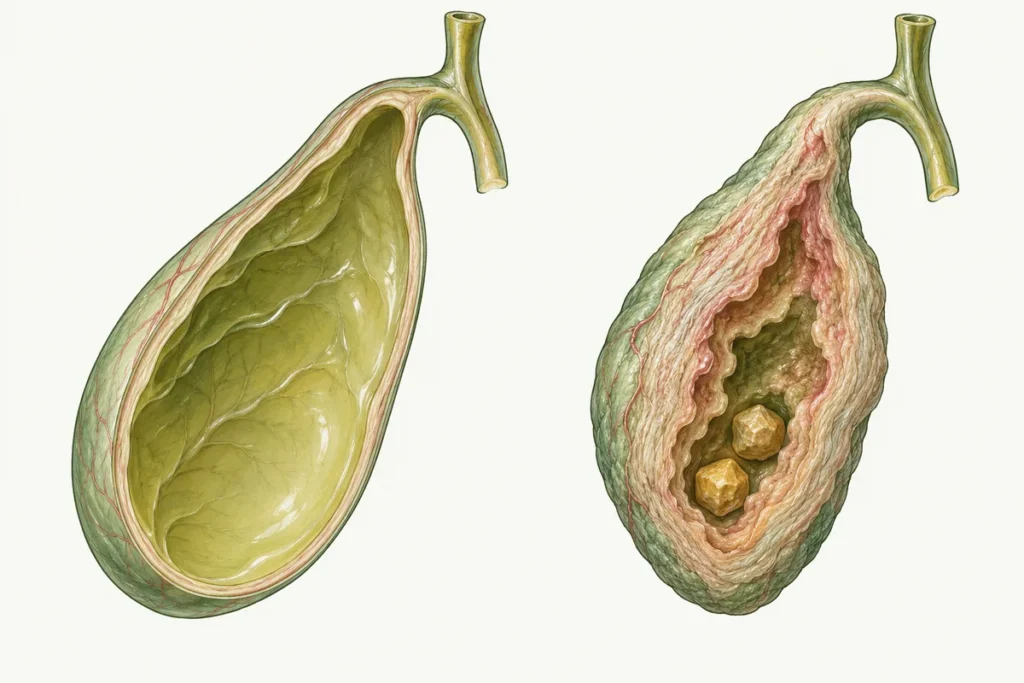
Chronic cholecystitis is gallbladder inflammation that lasts for a long time or returns in repeated episodes. It is often associated with gallstones, although the causes and pattern vary. People of different ages and sexes can be affected. Assessment aims to establish what is causing the symptoms and which treatment is appropriate. A sudden worsening of familiar symptoms or signs of infection calls for prompt medical attention.
What is chronic cholecystitis?
Longstanding inflammation can affect the gallbladder wall, the way it stores and releases bile, and the composition of bile itself. Stones of different sizes are often found alongside it. Some people develop chronic inflammation after acute episodes, while others have recurring symptoms. The whole history matters: a further attack does not, by itself, show that earlier treatment was inadequate. The factors below help explain what may sustain the inflammation.
Causes
Recurrent inflammation is often linked to stones that interfere with normal bile drainage. Stasis and altered gallbladder function can sustain the process, and a bacterial infection sometimes develops later. Possible organisms include Escherichia coli and other bacteria. Intestinal infections are assessed separately; Giardia, for example, primarily affects the intestine. Specific investigation findings are needed before an infection can be linked to gallbladder symptoms.
Other possible causes or associated conditions include:
- Impaired bile drainage due to stones, anatomical changes or sphincter dysfunction;
- Gallstone disease: changes in bile composition and emptying contribute to stones, which may sustain inflammation;
- Tumours that obstruct drainage, a separate cause requiring specialist assessment;
- Infections in people with severe immune suppression, including advanced HIV infection. In this setting, the clinician considers the person’s immune function; this explanation does not apply to most cases of chronic cholecystitis;
- Motility problems: smooth muscle contraction helps the gallbladder empty into the intestine at the appropriate time.
Chronic inflammation can follow an acute episode or repeated attacks. Symptoms that return over several years can affect both physical comfort and emotional wellbeing. It is worth reviewing the investigation and treatment plan with a clinician. A new episode needs assessment of its cause rather than a premature conclusion about the quality of earlier care.
Chronic calculous cholecystitis: symptoms
This is inflammation in the presence of gallstones. Gallstone disease becomes more common with age and is more frequent in women, although it can affect others. Risk factors include older age, pregnancy, excess weight, obesity, rapid weight loss, fasting, certain medicines and family history.
Possible symptoms of chronic calculous cholecystitis include:
- A pulling, dull or aching abdominal pain, often below the right ribs;
- Pain spreading to the back, lower back or beneath the shoulder blade;
- Biliary colic, an episode of severe upper right abdominal pain that is often steady during the attack;
- Jaundice means yellowing of the skin and whites of the eyes. It may indicate impaired bile drainage and needs urgent assessment to establish the cause and arrange appropriate care;
- Digestive symptoms such as altered bowel movements, nausea, a bitter or metallic taste, dry mouth and belching. These can also have other causes.
Possible complications include common bile duct stones, narrowing around the major duodenal papilla, acute pancreatitis, inflammatory liver injury, an abscess or peritonitis. These do not occur in every patient, but timely recognition is important.
Initial assessment uses gallbladder ultrasound and blood tests, including liver tests. Ultrasound assesses stones, size and the wall but may miss duct stones. MR cholangiography or endoscopic ultrasound may be needed. Gastroduodenoscopy examines the oesophagus, stomach and duodenum and can help when another cause of symptoms is suspected.
Treatment is chosen by considering symptoms alongside investigation results. Changes to food choices and medicines can ease symptoms, while laparoscopic cholecystectomy is the standard approach when gallstones cause attacks. Until treatment, avoid foods and drinks that reliably make you feel worse. Pain relief and antibiotics have specific indications. A blocked duct requires treatment to restore bile drainage; “hepatoprotectors” cannot achieve this. Herbs and bile-stimulating products may be unsafe without medical advice. The decision about surgery takes account of symptoms and risks as a whole.
Surgery is considered on the basis of symptoms, complications and investigation findings. A stone smaller than 15 mm can still cause a problem, so its size is considered alongside the other information. The surgeon selects laparoscopic or open access according to the circumstances and explains the planned procedure. Anaesthesia is required for the operation.
Chronic acalculous cholecystitis
In acalculous cholecystitis, investigations do not identify stones, although symptoms may recur alongside problems with biliary movement. Assessment therefore needs to distinguish inflammation from functional disorders and other causes of pain. The clinician considers possible bile stasis, previous injury, digestive conditions and diabetes. Inactivity, stress or changes in organ position may be discussed as part of the wider history, but one of these circumstances alone cannot establish the cause.
Possible features of acalculous disease include:
- Periods of worsening symptoms alternating with remission;
- An aching pain below the right ribs;
- Worsening after fatty, spicy or fried foods according to individual tolerance;
- Pain radiating to the right shoulder or back, including when tissues around the gallbladder are inflamed;
- Digestive complaints such as constipation or loose stools, belching, nausea and a bitter or metallic taste;
- Fever and chills may indicate acute inflammation or infection, not only empyema;
- Changes in bowel motility, with other possible causes also needing assessment.
Symptoms of chronic cholecystitis
Symptoms depend on severity, age and associated conditions. Pain is often below the right ribs and may spread to the back or other parts of the abdomen. Irritation near the diaphragm can cause referred pain in the right shoulder or shoulder blade.
Pay attention to accompanying symptoms as well. Some of the following may occur during an acute deterioration, so tell the clinician which changes you have noticed and how quickly they developed:
- Abdominal muscle guarding;
- Weakness and fatigue;
- Cold sweats;
- Belching, nausea or vomiting;
- Altered bowel movements and excess gas;
- A rapid heartbeat;
- Low blood pressure;
- Jaundice;
- Prolonged loss of appetite.
Pallor and fatigue need assessment of their possible causes. A vitamin or mineral deficiency should be established separately rather than assumed from a diagnosis of cholecystitis. Seek urgent medical attention for fever, severe or persistent pain, jaundice, low blood pressure or pronounced weakness, particularly when these symptoms are new or worsening.
How is chronic cholecystitis treated?
At the consultation, the specialist considers whether stones explain the symptoms, the condition of the gallbladder and the risk of complications. Stones found incidentally in a normal gallbladder without symptoms often need no treatment. When stones cause attacks, cholecystectomy is usually offered. Stone size and gallbladder contraction are only part of this assessment. Food choices and medicines address particular needs and support the overall treatment plan.
Approaches when there are no acute complications include:
- Nutrition. Regular smaller meals may be easier to tolerate. Limit individual triggers, often fatty or fried foods; pulses and meat need exclusion only when appropriate. Alcohol may be unsuitable depending on the condition. Most people do not need a lifelong strict diet after gallbladder removal and can gradually broaden their diet as tolerated;
- Medicines. Pain relief and antispasmodics are prescribed for specific symptoms, while antibiotics are used for suspected infection or other appropriate indications. Bile-stimulating products need careful consideration because they may be dangerous if a duct is blocked. Ask what each medicine is intended to do and how long to take it; there is no single mandatory regimen for every patient.
The standard operation for symptomatic gallbladder stones removes the gallbladder. Common bile duct stones can be removed endoscopically or surgically. These are different procedures: removing stones from the gallbladder alone is not the usual equivalent alternative to cholecystectomy.
Diagnosis
Diagnosis brings together symptoms, examination, ultrasound and blood test results. The clinician looks at the skin and eyes, examines the mouth and abdomen, then selects suitable investigations. A single finding on an ultrasound report is interpreted in the context of the whole picture. Assessment usually begins with informative, accessible tests; cholecystography is no longer a required first step for every patient.
Investigations may include:
- Gallbladder ultrasound to look for stones, wall changes and other abnormalities;
- Blood tests to assess inflammation and liver function; the white cell count may rise but is not abnormal in every case;
- Bile sampling, including duodenal intubation, only in selected circumstances rather than routinely;
- Additional imaging when indicated. Plain X-rays do not show every stone and cannot replace ultrasound.
Gastroscopy, CT or other tests may be added to clarify the diagnosis or exclude alternative causes.
Clinical advice for chronic cholecystitis
If you have previously had gallbladder inflammation or similar symptoms have returned, arrange a specialist review. Bring any existing results and explain what has changed since the last appointment. The clinician can review the course of the condition, explain whether further tests are needed and discuss treatment choices. This gives you a clearer plan for the next steps and the warning signs that call for urgent help.
Treatment at home
Do not replace prescribed care with folk remedies or independently start bile-stimulating medicines.
Without appropriate assessment, repeated attacks may leave serious complications unrecognised, including:
- Bile duct inflammation;
- Obstructive jaundice;
- Pus-forming inflammation, gallbladder perforation and peritonitis;
- Pancreatic inflammation.
Questions and answers
It is gallbladder inflammation that continues over time or returns in repeated episodes. It may involve gallstones and impaired gallbladder function and can follow acute attacks. Symptoms often alternate with periods of improvement. To understand why they recur, a clinician reviews the course of the condition and investigation results, rather than considering only how a previous episode was treated.
Chronic cholecystitis may be calculous or acalculous. Ultrasound is the main initial test for stones; plain X-rays do not show every type. Cholecystectomy may be indicated for symptomatic stones.
The first step is to establish what is causing the symptoms. Food adjustments and medicines can help, but surgery is usually advised when gallstones cause symptoms. Avoid foods that make you feel worse and discuss how long any restrictions are needed. Painkillers, antibiotics, bile-stimulating products and “hepatoprotectors” have different indications and should be considered separately. Stones in the ducts may require endoscopic removal. The clinician can explain the purpose of each part of the treatment plan.
An accurate diagnosis and a clinician-agreed plan are needed. Folk remedies do not relieve a dangerous blockage or replace necessary surgery. Self-treatment may cause adverse effects or delay care for complications, including peritonitis.