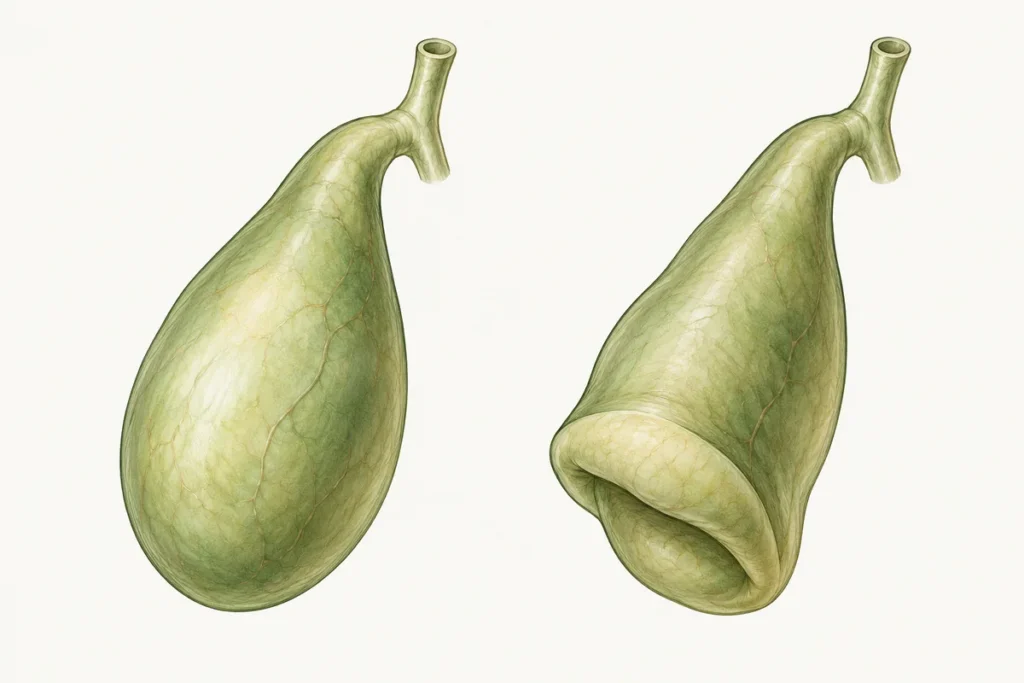
The gallbladder stores bile. Its rounded end is called the fundus; the body narrows into a neck that leads to the cystic duct. An ultrasound report may describe a fold or bend in the gallbladder. This often reflects a harmless variation in shape that causes no symptoms. A fold is different from the rare condition called gallbladder torsion, in which the organ twists around the tissue supporting it, disrupting its blood supply and bile drainage. Torsion requires emergency care.
Types of gallbladder folds
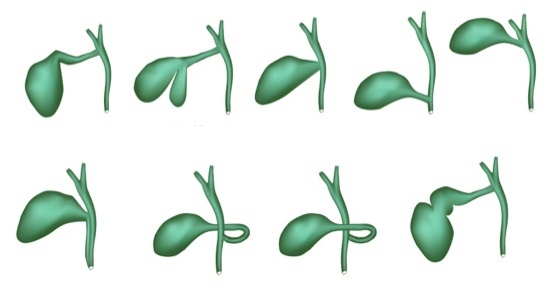
According to the location, descriptions may include:
- A fold in the gallbladder body;
- A change in the course or bending of a bile duct, which requires separate assessment;
- A bend at the gallbladder neck;
Reports may also use the following descriptions:
- Mobile or labile: the appearance or position of the fold changes;
- Fixed: the shape change remains in the same location;
- Functional: the appearance depends on body position and may disappear during repeat examination.
According to their origin, shape variations may be:
- Congenital, developing before birth;
- Acquired later in life.
Congenital variations in gallbladder shape develop before birth. An isolated fold is often a normal anatomical feature and does not, by itself, indicate disease. An ultrasound finding cannot explain exactly why the shape developed or establish a link with anything the mother did during a particular week of pregnancy.
During pregnancy, clinicians consider a range of factors that may affect the health of the mother and baby. These include the following, although they cannot be assumed to explain a particular gallbladder fold:
- Viral infections in the first trimester;
- Medicines taken before week 12 or at other stages: each medicine requires an individual safety assessment, and prescribed treatment should not be stopped independently;
- Smoking, alcohol or psychoactive substance use;
- Flare-ups of chronic conditions during pregnancy;
- Adverse environmental exposures.
Acquired changes in shape can accompany illness or changes in the position of abdominal organs. To understand their significance, the clinician considers the ultrasound findings alongside the rest of the assessment:
- Digestive conditions. Gallstone disease and acute or chronic cholecystitis may involve inflammation of the outer covering of the gallbladder, called pericholecystitis. Adhesions between organs can sometimes alter gallbladder position and shape;
- Changes in position. In later life, abdominal organs may sit lower or have different supporting attachments. Their position is assessed during imaging; knowing that gallstones are present does not establish whether the gallbladder has moved;
- Vigorous movement and heavy lifting. If pain starts after exertion, its cause needs assessment. Suspected torsion requires emergency care because waiting for it to settle on its own can be dangerous;
- A sedentary lifestyle affects general health but is not a proven independent cause of an anatomical fold;
- Diet. Fatty food stimulates gallbladder contraction and may trigger symptoms when stones are present. Food choices alone cannot establish the cause of a shape variation.
- Excess weight is associated with gallstone risk but does not by itself explain a gallbladder fold.
Symptoms
An isolated fold often has no symptoms. The following complaints are non-specific and may have many causes:
- A persistent bitter taste;
- Nausea;
- Belching;
- Heartburn;
- A yellowish or grey coating on the tongue;
- Bad breath;
- Upper abdominal heaviness after meals;
- Vomiting after fried, smoked or fatty foods;
- Excess gas and bloating;
- Diarrhoea that sometimes alternates with constipation.
Gallstones and impaired bile drainage can be associated with cholecystitis or cholangitis, meaning inflammation of the gallbladder or bile ducts. These complications do not necessarily accompany an isolated fold. Pain below the right ribs, fever, jaundice, nausea or vomiting warrants prompt medical assessment. Seek help according to how you feel, without waiting for a high fever or for the pain to become worse.
A stone can block a bile duct and cause jaundice. Sudden severe right-sided abdominal pain, vomiting, bloating, dizziness, fever or yellowing of the skin requires emergency care. These may reflect torsion or another acute condition; symptoms alone cannot distinguish them.
Diagnosis
Ultrasound is usually the first investigation. It shows the shape of the gallbladder and helps identify stones, wall thickening or fluid around the organ. The clinician considers the report alongside your symptoms and examination to decide whether the fold is relevant to your concerns. If the cause of symptoms remains unclear, further investigations may be needed.
Ultrasound may be used for initial assessment and follow-up of a specific condition when the results affect treatment. The need and interval for repeat tests depend on the clinical situation, rather than the presence of a fold alone.
A full blood count and biochemical tests help assess signs of inflammation, liver function and the condition of the bile ducts. They add information to the examination and ultrasound, which shows the shape of the gallbladder itself.
Treatment
A fold found by chance on ultrasound usually needs no treatment if there are no symptoms or other abnormal findings. Your clinician can explain whether any follow-up is useful in your case. An annual ultrasound is generally unnecessary solely because of a symptom-free variation in shape.
If symptoms are present, their cause should first be established. Hofitol, Ursofalk, Allochol, Nicodin, Papaverine, Drotaverine, Mezim, Festal and Pancreatin do not straighten a fold or form a compulsory treatment regimen. Bile-stimulating products may be unsafe with an obstruction, while ursodeoxycholic acid and digestive enzymes have specific indications. Take only medicines prescribed after assessment.
Antibiotics may be prescribed when bacterial infection or an acute inflammatory condition makes them appropriate. A fold by itself is not an indication for antibiotics.
Therapeutic ultrasound, electrophoresis and magnetotherapy have no convincing evidence of benefit for correcting an anatomical fold, restoring bile drainage or treating acute inflammation. If infection, a blocked duct or inflammation is found, care should address that condition. These additional procedures must not delay necessary medicines, endoscopic treatment or surgery.
After examining you and reviewing the investigations, the clinician explains the cause of your symptoms, recommends treatment and discusses how long it should continue. The choice depends on the condition found and your overall health. Ask what improvement to expect and when to arrange a review.
Before taking medicines for these symptoms, it is important to establish their cause. Self-treatment may cause side effects or delay the diagnosis of a condition that needs urgent care. Discuss persistent or worsening symptoms with a clinician.
When to seek medical advice
Arrange an assessment, urgently where appropriate, if:
- You have recently developed nausea, heartburn, a bitter taste, mild pain below the right ribs or heaviness after meals;
- These symptoms persist or recur;
- Severe pain or jaundice develops suddenly: seek emergency care;
- You have no symptoms but would like to understand your ultrasound report and whether any further assessment or follow-up would be helpful.
Consultation at the Centre for Laparoscopic Surgery
- The centre can assess gallbladder shape changes, suspected disease and the need for further investigations. Suspected torsion requires emergency surgical care rather than waiting for a routine appointment. During the consultation, you can ask about the clinician’s training and experience, discuss your concerns and learn which investigations or treatment options may be appropriate for you.
- Appointments at an available time that suits you. When booking, ask about the earliest available appointments so that you can choose a suitable time and check the expected waiting period.
- Information about consultation and investigation costs. Before an investigation, ask what question it is intended to answer, how the result could affect treatment and what it costs. If further tests are needed to clarify the diagnosis, ask the clinician to explain their purpose.
- Possible discounts, including for pensioners and people with disabilities. Ask the clinic about current concessions and available payment arrangements.
To book a consultation at the Centre for Laparoscopic Surgery, call +380953566412 or use the form below.