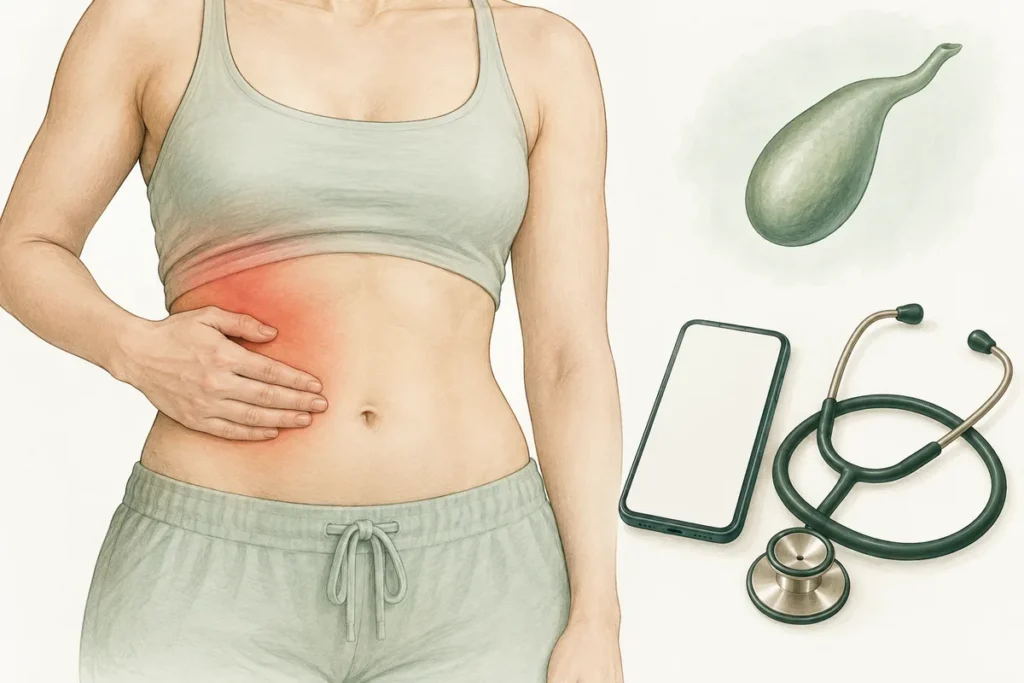
Pain associated with the gallbladder is usually felt beneath the right ribs and may spread to the right shoulder, shoulder blade or, less commonly, the neck. It can feel dull, aching or severe, and may worsen with movement or a deep breath. Nausea and a bitter taste in the mouth can accompany it. Assessment helps distinguish a short episode of biliary colic from the more persistent pain of acute cholecystitis. Seek prompt medical care if pain is severe or does not settle, so a clinician can check for stones, inflammation and possible blockage of the bile ducts.. Complicated inflammation or a blocked bile duct can be life-threatening, making prompt assessment essential. Surgery is often needed. The diagnosis and the patient’s overall condition guide the decision about whether to operate, when to do so and which other treatment is appropriate.
Causes and risk factors
The most common cause of acute cholecystitis is a stone blocking the cystic duct. Some people notice symptoms after a large, fatty or fried meal, although attacks can also occur without an obvious food trigger. Eating dry meals, spicy food, drinking alcohol or having fizzy drinks does not by itself explain an attack. A clinician considers these habits alongside the findings of the examination and tests.
Changes in bile composition and gallbladder emptying can contribute to stones. When a duct is blocked, pressure rises, the gallbladder distends and its wall may become inflamed. This causes right upper abdominal pain that is often steady during an episode.
Assessment also considers other conditions:
- coexisting gastrointestinal and liver disorders, including gastritis, pancreatitis, duodenogastric reflux and hepatitis, which can produce similar symptoms;
- congenital anatomical variations, which do not always cause disease;
- parasitic infections when the exposure history is relevant, including opisthorchiasis; if giardiasis is found, the clinician separately assesses its relationship to the symptoms;
- bacterial infection that may complicate inflammation.
Obesity, limited physical activity, dietary patterns and a family predisposition can influence the risk of gallstones. During assessment, a clinician may also ask about fluid intake, stress and the amount of fiber in the diet. These details help build a picture of general health; examination and investigation are still needed to establish the cause of a particular attack.
Gallstones may remain symptom-free for a long time or cause only occasional episodes of pain. Changes in bile composition can encourage crystals containing cholesterol, bilirubin compounds or calcium salts to form. Some people first develop sludge, a deposit in the gallbladder sometimes described as “sand.” Stones can subsequently develop from this material, but this progression does not occur in every person.
A stone blocking a duct can prevent bile from reaching the duodenum and cause severe pain. This is usually felt beneath the right ribs or in the upper central abdomen and may spread to the back, right shoulder blade or shoulder. Sensations alone cannot reliably show whether a stone is moving, and movement may go unnoticed. Severe pain needs medical assessment whatever its suspected explanation.
Symptoms of a cholecystitis attack
Heaviness under the right ribs, nausea and bitterness can accompany several digestive conditions. Some people also report insomnia, irritability, fatigue or night sweats. These are nonspecific. Cold sweats with severe pain, weakness or chest pain require urgent assessment.
Yellowing of the skin or the whites of the eyes, dark urine and pale stools can indicate impaired bile drainage. These changes require urgent medical investigation. Fever may also occur. A coated tongue and thirst have several possible explanations. An increased white blood cell count can support concern about inflammation; the clinician interprets it alongside symptoms, examination findings and other test results to establish the diagnosis.
New pain needs investigation even if previous tests did not show gallstones. It may follow a large meal or occur during a period of stress, with the timing varying from one episode to another. Some people also experience morning bitterness, belching or vomiting. If vomiting brings temporary relief, persistent or recurring pain still needs assessment before the situation can be considered safe.
Chest pain after eating or when lying down should not automatically be attributed to the gallbladder. Heart disease and other causes must be considered, especially with breathlessness, cold sweats or weakness. Bloating, diarrhea or alternating diarrhea and constipation also have many possible causes. A primary care clinician or gastroenterologist can investigate; acute warning symptoms need emergency care.
Complications of a cholecystitis attack
Seek medical assessment for unexplained severe pain rather than relying entirely on treatment at home. Suitable pain relief can be used, but temporary improvement does not rule out complications and should not delay examination. Tell the clinician which medicines you have taken and when, so this can be considered when planning further treatment.
Delayed necessary treatment may increase the risk of:
- cholangitis;
- obstructive jaundice;
- gallbladder perforation and peritonitis;
- biliary pancreatitis.
Timely examination and investigation help establish the cause of the attack and the treatment needed. When acute cholecystitis is suspected, measures taken at home can support the process of seeking help, but medical treatment is still essential.
Treating a cholecystitis attack
Acute cholecystitis often requires hospital care. The team follows changes in symptoms during treatment: improvement and the next treatment step depend on the cause of the attack, the severity of inflammation and any complications. The investigation findings may lead to the following medicines or measures being recommended:
- antibiotics are used when bacterial infection treatment is indicated;
- antiparasitic medicines are prescribed for a confirmed relevant infection; the role of detected giardiasis or opisthorchiasis needs individual assessment;
- bile-stimulating medicines are not a standard way to relieve acute blockage; do not start them before obstruction has been excluded;
- analgesics and sometimes antispasmodics are used when appropriate; an antispasmodic does not treat every cause of pain.
Early laparoscopic cholecystectomy, removal of the gallbladder through small incisions, is often recommended for acute calculous cholecystitis. There is therefore no need in every case to wait for repeated courses of medicines to fail before considering surgery. Jaundice calls for assessment of the ducts and may require a separate endoscopic procedure. Observation may be appropriate for incidentally discovered stones that cause no symptoms. Recovery after laparoscopy is discussed individually, taking the patient’s condition and course of treatment into account.
At the Center for Laparoscopic Surgery, you can discuss investigation and personalized treatment. Ask about gastroenterology or surgical appointments, prices and discounts for people with disabilities or pensioners at +380953566412. Do not wait for a routine appointment during an acute emergency.
Questions and answers
New severe or persistent pain needs urgent assessment even if cholecystitis has already been diagnosed and earlier tests found no stones. If a clinician has given you a pain-relief plan, follow it while arranging medical care. Continuing pain should not be managed simply by lying down and waiting for an antispasmodic to work. After assessment, the clinician can advise which medicines are needed, whether you can eat and drink, and whether surgery is necessary. Do not begin several days of fasting yourself. Further follow-up at the center can be discussed once the acute symptoms have been assessed.
For a first episode of severe right upper abdominal pain or other warning symptoms, contact emergency care. While waiting, take a comfortable position, loosen tight clothing and avoid leaving an unwell person alone. Lying on the side or slightly raising the head may be comfortable but does not treat the cause. Do not force food or drink during vomiting. Follow the dispatcher’s or clinician’s instructions about medicines and next steps.
Related reading: Acute cholecystitis · Gallbladder pain · Gallbladder ultrasound.