
Gallstone disease is common, and gallbladder removal is one of its treatments when indicated. After gallbladder removal, recovery and everyday habits may need temporary adjustment. The liver continues to produce bile, and most people can live normally without a gallbladder. This article discusses food, activity, wound care and symptoms that need medical attention.
What to expect after gallbladder removal
Gallstones form when components of bile crystallise, often involving cholesterol or bilirubin, and gallbladder emptying may contribute. Medicines to dissolve selected cholesterol stones are suitable only in limited circumstances; they are not routine treatment for everyone, and stones may recur. Stones can obstruct a duct and cause inflammation or pain. Suspected obstruction or an acute complication needs prompt medical assessment; the necessary treatment may involve endoscopy, surgery or another intervention.
Cholecystectomy removes the gallbladder together with the stones inside it. It is often recommended when stones cause symptoms, while symptom-free findings may be managed differently. Before surgery, it is useful to clarify which complaints come from the gallbladder and which may need separate treatment. The two main surgical approaches are:
- Open surgery through a larger incision.
- Laparoscopic surgery.
Most gallbladder operations are performed laparoscopically, with the surgeon working through small incisions using a camera for guidance. Compared with open surgery, the wounds are usually smaller and recovery is often quicker. Removal helps relieve symptoms caused by the gallbladder and reduce repeat attacks. Pain or digestive discomfort with another cause may need further assessment and treatment afterwards.
After gallbladder removal, the liver continues producing bile, which reaches the intestine without being stored first. Some people continue to have, or develop, abdominal pain, indigestion or diarrhoea. Discuss these symptoms with your clinician so that changes following surgery and other possible causes can be assessed and appropriate help arranged.
Possible symptoms include:
- persistent or recurrent abdominal pain, including pain that spreads around the upper abdomen;
- heaviness or discomfort on either side of the abdomen;
- a bitter taste or nausea;
- heartburn or bloating;
- pale stools or dark urine, particularly with yellowing of the skin or eyes.
The term “post-cholecystectomy syndrome” describes symptoms that continue or develop after gallbladder removal. Choosing treatment requires an assessment of their cause; the number of pain episodes alone is not enough. The clinician asks about the symptoms and may recommend investigations, dietary changes or a specific treatment. Jaundice or severe pain needs urgent medical attention.
If you feel well, you can usually return gradually to everyday activities while following your discharge instructions. Prolonged strict restrictions are needed only in certain circumstances. Problems such as duct stones, pancreatitis, persistent diarrhoea or constipation may need their own treatment. Discuss any new symptoms with your clinician so that their cause can be assessed and the recovery plan adjusted.
Follow-up of the bile ducts depends on symptoms and the details of the operation. Stones can sometimes remain in the ducts or form later, so new pain, fever or jaundice needs review. The clinician decides which tests are useful. For people without symptoms, the follow-up schedule is also tailored to any specific reasons for investigation.
Recommendations after gallbladder removal
If symptoms or the treatment plan make it appropriate, the clinician may recommend an abdominal ultrasound, including a view of the common bile duct. The frequency of scans depends on symptoms and the agreed follow-up plan. Allochol, Mezim, Creon and Festal have different ingredients and purposes. Before taking one, ask what it is intended to treat, how long to use it and whether monitoring is needed. The same applies to antispasmodics, which are prescribed for particular indications.
Antibiotics, vitamins and other medicines are prescribed when there is a reason to use them. At discharge, check the purpose of each medicine, how long to take it and when to stop, so that you continue the treatment intended for your recovery.
Pain relief
Recovery time varies from person to person. The early days often involve wound discomfort and tiredness; recovery after an uncomplicated laparoscopic operation is usually quicker than after an open procedure. Pain relief should follow the discharge prescription, taking account of allergies, other medicines and kidney, stomach or liver conditions.
Discharge timing depends on recovery and the clinical plan. You may encounter the following pain-medicine brands, but they have different ingredients, risks and doses and should not be started or combined without advice:
- Analgin – use only if specifically prescribed;
- Ketanov – use only if specifically prescribed;
- Ibuprofen – suitability and dosing must be checked;
- Solpadeine – formulation and suitability must be checked;
- Dexalgin – use only if specifically prescribed;
- Ketolong – use only if specifically prescribed.
Follow the prescribed dose and duration for each medicine. Different products can contain the same ingredient or have overlapping effects, so check combinations with the clinician in advance. No-Spa or mebeverine may be used for specific reasons; any substitution for your postoperative pain relief should also be agreed. If pain increases or prescribed treatment does not help, contact the team for assessment rather than adding bile-stimulating medicines yourself.
Diet after gallbladder removal
After gallbladder removal, bile reaches the intestine without being stored between meals. Most people can gradually return to a balanced diet. During the first few days, smaller regular portions may be easier to tolerate. Choose a meal pattern that suits you, as five or six meals a day are not necessary for everyone. Food supports nutrition and comfortable digestion; it does not act as a treatment to “cleanse” the bile ducts.
If a full meal is difficult, try dividing the portion or adding a small snack according to your appetite and other health needs. Bile continues to help digest fat after surgery; it does not itself contain digestive enzymes. Large fatty or fried meals can cause discomfort in some people. Try reducing the portion, and seek advice for persistent pain or nausea so that its cause can be established.
Choose varied meals and reduce foods that cause symptoms. A month on a strict “diet No. 5” is recommended only when it suits the individual’s needs. Replacing some saturated fats with unsaturated fats can support a balanced diet, using oil as an ordinary food in moderation. It should not be used for a bile-flushing treatment. Tolerance of fried food, coffee, tea and fizzy drinks varies. Avoid alcohol when it conflicts with medicines or advice for your recovery.
Showering, baths and swimming
Follow the instructions for the actual dressings, glue, stitches and any drain you have. Healing and water resistance depend on the wound closure and dressing. Ask when you may shower, whether a waterproof dressing is needed and how to dry the area afterwards. Do not soak wounds in a bath or pool until the team says healing is sufficient.
If stitches need removal, the team will explain how this affects washing and dressing care. Use the instructions for your own wound and dressing.
Wound care and stitch removal
Use the wound-care plan given at discharge. Do not routinely apply alcohol, iodine, calendula tincture or another antiseptic unless advised, as the correct care depends on the closure and dressing. Keep dressings on for the recommended period and ask what to do if they become wet, loose or soiled.
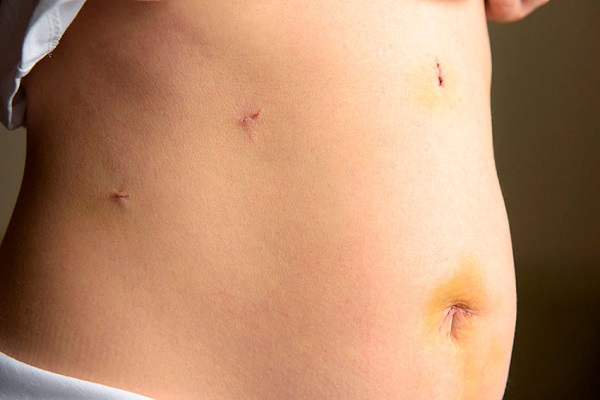
Incisions may be closed with dissolving stitches, surgical glue or stitches that need to be removed later. At discharge, check which method was used and when to attend a review. Small incisions usually leave small scars, with their appearance depending on healing. If stitches need removal, the team chooses the timing according to the wound and your circumstances.
Increasing redness, warmth, swelling, pain or discharge from a wound may indicate infection and needs prompt clinical advice. A photograph can help the team if they request one through an agreed channel, but should not delay an examination. Fever, severe pain or feeling very unwell requires urgent assessment rather than waiting for an email or messenger reply.
Activity and sick leave
Start with gentle movement and gradually return to everyday activities. If you want to add exercises, discuss which are suitable for your health and the details of the operation, especially after a complicated recovery. The aim of movement is to support recovery; a special programme intended to “normalise bile flow” is not routinely necessary.
Tiredness may continue beyond the first few days. Plan your return to desk work, lifting and exercise according to your recovery and the demands of each activity. Agree the timing and lifting limits with your surgeon. Resume driving only after the effects of anaesthesia and sedating medicines have passed and you can confidently control the vehicle and perform an emergency stop without pain. Follow the team’s advice and relevant insurance requirements.
Ask the treating team about the current process for documenting temporary incapacity and any follow-up with your family doctor. The required time off work and any extension depend on your recovery and job demands.
Follow-up visits and tests
Keep to the discharge plan even if you feel well. It may include a wound or drain check, discussion of tissue examination results or a specialist appointment. If new symptoms develop, contact the treating team. The clinician will assess them and decide whether blood tests, imaging of the liver and bile ducts or another investigation would be useful.
Possible problems during recovery
How you feel may change during recovery. The following sections explain how particular symptoms are assessed and when to ask for help. Knowing what to watch for can help you seek timely advice if a problem arises.
Diarrhoea after gallbladder removal
Some people develop looser or more frequent stools after surgery. The effect of bile acids on the bowel may contribute, but other causes are possible. Persistent diarrhoea should be discussed with a clinician because it can lead to dehydration. Assessment helps identify the cause and choose appropriate treatment.
If diarrhoea begins, tell the clinician when it started, how often it occurs and about any accompanying symptoms. Medicines, infection, bile acids and other bowel conditions may be involved. Considering these factors helps guide treatment as well as any useful changes to meals.
Treatment depends on the cause. Different medicines have different purposes and limitations:
- adsorbents such as Smecta, activated charcoal, Lactofiltrum or Filtrum are not routinely needed and can interfere with other medicines;
- antibiotics are used only for a relevant diagnosed or suspected infection, not for every episode of diarrhoea;
- probiotic or prebiotic products such as Linex, Bifiform or Normobact are considered when appropriate after the cause of symptoms has been assessed; discuss the value of a particular product with your clinician;
- bile-containing or bile-stimulating products such as Cholenzym, Allochol or Liobil are not routine self-treatment for post-cholecystectomy diarrhoea;
- Ursosan, Cyclovalon and Hepatosan have different ingredients and purposes; a clinician assesses the indication for each separately and explains what treatment is intended to achieve;
For diarrhoea related to bile acids, a clinician may choose treatment directed at that cause. Medicines affecting bile flow and products described as “liver protectors” serve other purposes and are not suitable in every situation. Before starting one or changing a prescribed regimen, discuss your symptoms and all the medicines you use with the clinician.
Pain after gallbladder removal
New, persistent or recurrent pain after surgery needs assessment, whether it begins soon after the operation or much later. “Post-cholecystectomy syndrome” describes these symptoms but does not, by itself, determine treatment. In selected situations, the clinician assesses the sphincter of Oddi, a muscle controlling the flow of bile and pancreatic secretions into the duodenum. Other possible causes of pain are also considered.
Treatment follows the diagnosis. Pain relief or an antispasmodic may be appropriate in some situations, but bile-stimulating agents and antibiotics are not routine treatment for unexplained pain. Intetrix, furazolidone, doxycycline and metronidazole are not interchangeable treatments; use them only for an indication established by a clinician.
Fever after gallbladder removal
Tell the treating team about a raised temperature, especially if it persists or comes with pain, shivering, wound changes or jaundice. There are several possible causes, and investigations may be needed, for example to assess a collection of fluid. Pay attention to how you feel overall: concerning symptoms matter even when the temperature is below 38°C.
Seek urgent care if you feel markedly worse or develop severe or increasing pain, repeated vomiting, jaundice or breathlessness. These symptoms need attention even without a high fever. Tell the clinical team about all the changes so that they can assess how urgently you need help and what assessment is appropriate.
Constipation after gallbladder removal
Constipation after surgery may be related to anaesthesia, opioid pain medicines, reduced movement and changes in food or fluid intake. The time it takes for bowel habits to settle varies. Discuss persistent constipation, your medicines and the recovery plan with a clinician to work out what help is needed.
Food, fluids and gentle activity should follow your recovery plan. A clinician or pharmacist can advise whether a laxative is needed and which one is suitable. Guttalax, Microlax, Fortrans and bisacodyl have different purposes, so check their suitability for your situation before use. Use enemas and bowel-cleansing products only on professional advice. Severe pain, vomiting or abdominal swelling needs assessment of its cause. Any potential use of probiotics is considered separately.
A bitter taste after gallbladder removal
A bitter taste can have several causes; bile reflux should not be diagnosed from this symptom alone. Persistent symptoms need assessment, and treatment depends on the cause. Do not self-treat with Allochol, Liobil, Cholenzym or herbal preparations such as tansy, rosehip, lingonberry or flax without an assessment of the cause and their suitability. Herbal products can also have adverse effects or interact with medicines.
Bile duct stones after gallbladder removal
Stones can remain in the bile ducts after gallbladder removal or form later. If this is suspected, blood tests and imaging help assess their location and effect on drainage. ERCP is commonly used for removal; selected cases may need surgery or specialist lithotripsy. The treatment and recovery plan depend on the location and complexity of the stones, and the clinician will explain which approach is appropriate.
Pancreatitis after gallbladder removal
Pancreatitis can occur after gallbladder removal, for example because of a retained duct stone or another cause. It is not an expected part of recovery for most patients. Severe pain in the upper abdomen, particularly with vomiting, needs urgent assessment. Investigations help establish the cause and guide treatment.
Treatment for pancreatitis depends on its cause and severity and may require hospital care. It can include fluids, pain relief and treatment of any obstruction. Antibiotics are used when infection or another specific indication is present, with the medicine and duration chosen by the clinician. Drotaverine, Buscopan and other medicines should be taken only for an established reason and according to the treatment plan.
If ursodeoxycholic acid, including Ursofalk, is proposed after surgery, ask about the diagnosis, purpose, duration and monitoring plan. These medicines are prescribed for a specific clinical reason; routine recovery after cholecystectomy does not call for their use to prevent pancreatic stones.
Questions and answers
People who have had a cholecystectomy often have questions about returning to their usual lives.
Most people do not need severe long-term dietary restrictions. A balanced diet can include lean meat, fish or other protein sources according to preference and tolerance. Choose a lighter broth if it is more comfortable, and include fish regularly if you enjoy it; there is no fixed cooking method or weekly schedule for everyone. Adjust meals to your recovery and any other dietary needs.
Butter and other fats can be used in appropriate amounts; unsaturated oils may be part of balanced eating. Dairy foods, including yoghurt or cottage cheese, are options if tolerated. Cereals can also be included, without an automatic ban on semolina. Individual symptoms matter more than a rigid list of permitted products.
Fruit, vegetables and berries can be included in reasonable portions. Cooked varieties may be easier to tolerate if raw foods cause bloating. Melon and watermelon can be ordinary foods, but are not necessary diuretic treatment after gallbladder surgery.
Your food choices can remain varied. Sweets, honey, jam and marshmallows can be enjoyed in moderation according to your preferences and other health needs. Consider the portion and your tolerance when choosing baked goods, chocolate, pickles, fatty foods or salty foods. Adjust foods that provoke symptoms, and seek advice about persistent discomfort so that the cause can be assessed without unnecessarily narrowing your diet.
Small scars usually remain at the incision sites after laparoscopy, generally smaller than the scar from open surgery. Their visibility depends on healing and your skin. Cosmetic stitches can also leave a mark, so it is helpful to discuss realistic expectations with the team.
A hernia can develop at an incision after laparoscopic surgery. Smaller incisions reduce some wound-related problems, but incision size and healing vary. Report any new lump, pain or swelling near a wound to the clinician, and follow the advice on lifting and activity during recovery.
Avoid alcohol during the early recovery period when advised and while taking medicines with which it may interact. Later advice depends on general health, liver or pancreatic disease and alcohol-related risks. Ask your treating team about the restrictions that apply to you; alcohol should not be used to aid digestion.
An abdominal binder is usually unnecessary after uncomplicated laparoscopy. Your surgeon may recommend one according to the incisions and details of the operation. If prescribed, ask how and for how long to wear it. Gradually increasing activity and following wound-care advice remain important, as a binder alone does not prevent every hernia.
Conclusion
At a consultation, you can discuss assessment, the reasons for surgery, alternatives and a recovery plan. The hospital stay depends on your health and the course of the procedure; discharge within a day is sometimes possible. Before treatment, ask for an itemised written estimate showing included services, possible extra charges and any available concessions. Also check the arrangements for follow-up visits.
Related reading: Gallbladder removal: surgery and recovery · Diet for cholecystitis · Bile duct stones.