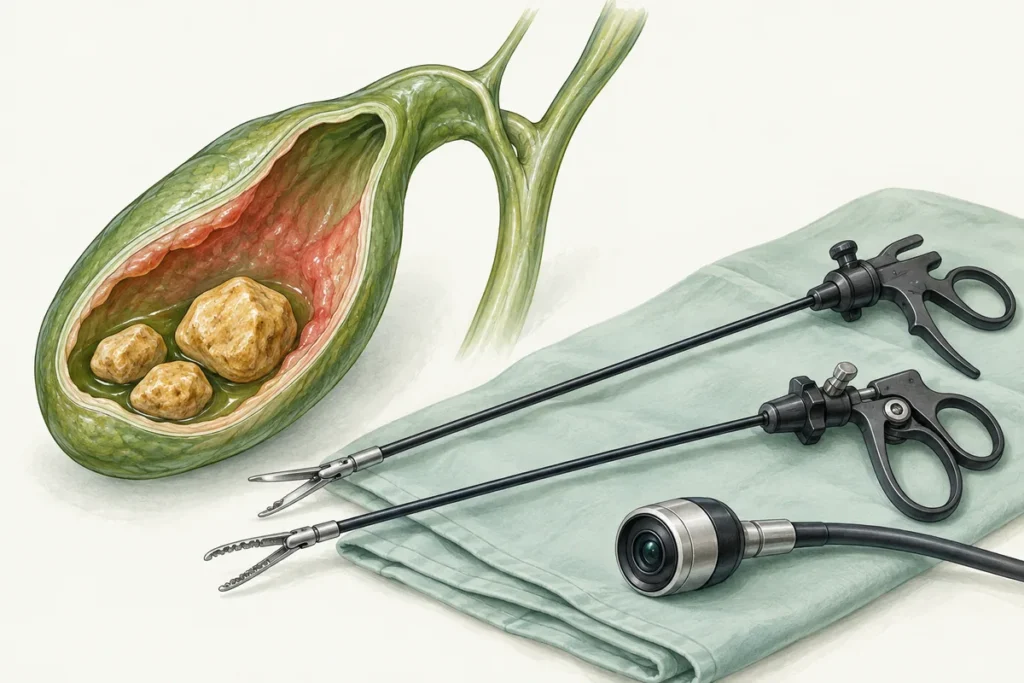
Calculous cholecystitis is inflammation of the gallbladder associated with gallstones. A stone may obstruct the gallbladder outlet and interfere with bile drainage. Inflammation can cause right upper abdominal pain and fever; infection may also develop. Biliary colic and jaundice require assessment, with jaundice raising concern about bile duct obstruction. The condition can be acute or chronic.
About the condition
“Calculous” means that stones are present. Many gallstones contain cholesterol; pigment stones and stones with calcium-containing components also occur. Stones that enter the bile ducts can cause obstruction, inflammation and severe pain. Surgery is often part of treatment when stones cause symptoms or complications.
Diagnosis brings together your symptoms, a physical examination, blood tests and ultrasound. During ultrasound, a probe is moved over the skin of the abdomen; pressure over an inflamed area can feel uncomfortable. Medical records may use an ICD-10 code to describe the diagnosis. The code reflects where the stones are and which form of inflammation has been identified:
- K80.0 – gallbladder stones with acute cholecystitis;
- K80.1 – gallbladder stones with another form of cholecystitis;
- K80.4 – bile duct stones with cholecystitis.
A balanced diet and gradual weight management can help address some of the factors associated with gallstones. Stones and acute attacks can still occur despite these measures. If symptoms keep returning, a consultation at the Centre for Laparoscopic Surgery can help you discuss their cause, whether monitoring is appropriate and the treatment options for chronic or recurrent disease.
Causes
Stones form over time, while acute inflammation usually starts when a stone blocks the cystic duct. To understand your symptoms and plan care, the clinician considers risk factors for stone formation alongside other relevant details of your medical history:
- a diet high in energy and saturated fat, particularly when associated with excess weight;
- prolonged fasting, very restrictive diets or rapid weight loss;
- previous abdominal injury or surgery, which helps the team plan assessment and treatment even though it does not, by itself, explain why stones formed;
- low physical activity and its relationship with general metabolic health;
- endocrine or metabolic conditions;
- certain hormone treatments, especially those involving oestrogen.
People with a family history of gallstones or other digestive conditions should discuss their individual risk. Obesity, diabetes and some oestrogen-containing medicines may affect bile composition or gallbladder function. Do not stop contraception or another prescribed medicine without discussing it with your clinician.
Symptoms
Possible symptoms of calculous cholecystitis need medical assessment. Severe or persistent pain, fever, repeated vomiting or jaundice should be assessed urgently, without waiting for an appointment at this centre. Symptoms and signs that deserve attention include:
- pain under the right ribs, sometimes spreading towards the right shoulder or back;
- nausea or vomiting;
- weakness and feeling generally unwell; if bone fragility is a separate concern, its cause should be investigated independently;
- cold sweats, which are not specific to gallbladder disease;
- blood-pressure changes, especially faintness or low pressure in someone who is acutely unwell;
- yellowing of the skin or eyes;
- fever.
Symptoms can start suddenly. Pain sometimes follows a meal, including a fatty meal, but other findings are also needed to establish the diagnosis. Constipation, diarrhoea and changes in bowel habits occur in many conditions, so they are considered alongside the rest of your symptoms. Persistent upper abdominal pain needs assessment even when you cannot link it to a particular meal or another trigger.
Women and men can have similar symptoms and are assessed using the same general clinical principles. Investigations and treatment are nevertheless individualised, taking account of age, pregnancy where relevant, other illnesses, medicines and the severity of the condition.
Forms and progression
Inflammation can cause different changes in the gallbladder wall. The descriptions below help explain the severity of the condition; an individual patient may have one of these forms without progressing through all of them:
- Early, or catarrhal, inflammation causes swelling and inflammatory changes in the gallbladder wall. Medicines and supportive care may ease pain and help you feel better. The team then reassesses the condition, because improvement in symptoms does not always remove the risk of complications or the need for surgery. The findings guide both the treatment and its timing.
- Phlegmonous or suppurative inflammation is a more severe form that may involve pus and more extensive inflammation. It can be accompanied by intense pain, fever, chills and systemic illness. These findings need urgent hospital treatment rather than observation at home.
- Gangrenous cholecystitis involves death of part of the gallbladder wall. The weakened wall can perforate, allowing infected contents into the abdominal cavity and causing peritonitis or sepsis. This is a serious, potentially life-threatening complication requiring urgent specialist care.
Complications
Delayed or inadequate treatment can allow complications to develop. Possible problems include:
- stones in the common bile duct, called choledocholithiasis, sometimes causing obstruction;
- an abscess;
- pancreatitis;
- infection in the bile ducts and changes in liver blood tests; further assessment is needed to establish the cause, as abnormal results alone do not confirm hepatitis.
An abscess or spreading infection can be life-threatening. Timely medical assessment is important, especially with severe pain, fever, vomiting or jaundice. Effective treatment is possible at different stages, but the risk and complexity may increase when complications develop.
Treatment
Suspected acute calculous cholecystitis generally requires hospital assessment and treatment. Blood tests and ultrasound help establish the diagnosis and assess complications. The surgical team uses the results together with the examination and overall condition to plan treatment.
Initial treatment aims to control pain, correct dehydration and treat infection when present. It may include the following, selected and prescribed by the clinical team:
- antibiotics when infection is suspected or the clinical situation otherwise warrants them;
- pain-relieving medicines;
- intravenous fluids and other supportive treatment according to the patient’s condition;
- review of medicines that affect bile flow: do not take bile-stimulating remedies such as Allochol for a suspected obstruction unless a clinician specifically directs treatment.
Initial medical treatment may be followed by surgery. Early laparoscopic cholecystectomy is often recommended for acute cholecystitis when the patient is fit for it, after the team has assessed the diagnosis, severity and surgical risk. Factors affecting the plan include:
- the severity of illness;
- recurrent symptoms or attacks in chronic disease;
- infection and its consequences;
- suspected bile duct obstruction or injury requiring an appropriate specialist plan;
- previous surgery or adhesions that may affect the technical approach, rather than serving as an indication on their own.
Age and the distance to the nearest hospital are considered when planning treatment and follow-up. The clinician discusses how they affect surgical risk and access to urgent help if symptoms return. The decision to remove the gallbladder rests on the medical indication, your overall health and your preferences, rather than on age or location alone.
Gallbladder removal is called cholecystectomy. It can be performed through an open incision or laparoscopically through several small incisions. Recovery is often shorter after laparoscopy. This approach can be used for acute cholecystitis, including selected complicated cases. The surgeon assesses the risks when choosing an approach; sometimes an open operation, or a change to open surgery during the procedure, is the safer option.
Arrange a consultation
A consultation is an opportunity to review symptoms, investigations and the reasons for any proposed treatment. Ask who will assess you and what the consultation includes. Confirm the current fee and available appointments before booking, and ask for a clear explanation of the treatment options.
Contact the Centre for Laparoscopic Surgery to confirm current consultation arrangements, including whether a fee applies. You can seek advice without committing to an operation. Discuss the likely costs and alternatives before making a treatment decision.
Questions and answers
Early gallbladder removal is often recommended for acute calculous cholecystitis when it is safe for the patient. Some people first need stabilisation or a different approach. The decision depends on the diagnosis and overall health; gallstones that cause no symptoms or complications usually do not require surgery.
Pain and tiredness are common concerns in the first few days and may last longer. Your recovery pace depends on the operation and your health. Start with light activity as advised and increase it gradually. Agree a separate plan with your surgeon for returning to heavy work and exercise, as a week may be too soon for these activities.
You can ask for an assessment and advice based on the results without committing to surgery. The clinician explains the options, benefits and risks, and the patient gives informed consent to any proposed operation. Confirm which investigations the centre can provide and their cost.
It usually develops when a gallstone obstructs the cystic duct, leading to inflammation. Stone formation is influenced by bile composition and gallbladder emptying, with factors such as obesity, rapid weight loss, some hormonal treatments and metabolic conditions affecting risk. Diet or inactivity alone does not explain every case.
Gallstones may remain unnoticed for a long time, so an acute attack can be the first sign of disease. Without earlier symptoms, there may have been no reason to seek treatment sooner. If symptoms do develop, the priority is to assess the current problem and obtain timely care.
Hospital care may include pain relief, fluids and antibiotics when needed. If your condition allows, the team discusses early laparoscopic gallbladder removal and decides on the timing. Surgery removes the affected organ and helps reduce the risk of further attacks. Its expected benefits and possible complications are assessed in the context of your individual health and circumstances.
At a planned consultation, the Centre for Laparoscopic Surgery can review your symptoms, investigation results and possible surgical treatment. Examination, blood tests and ultrasound commonly guide the decision, with additional investigations chosen according to your needs. When booking, ask who will see you, what the consultation costs and how to obtain a written treatment estimate. Severe or persistent pain, fever, vomiting or jaundice requires urgent medical help without waiting for a routine appointment.
Related reading: Acute cholecystitis · Gallbladder removal: surgery and recovery · Recovery after gallbladder removal.