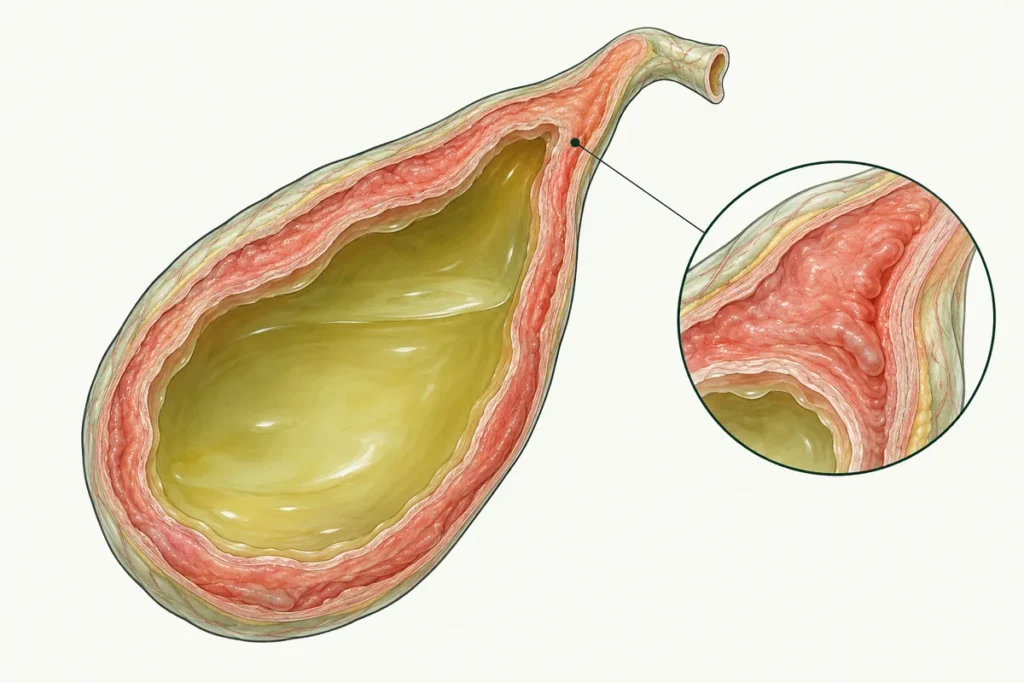
Acalculous cholecystitis is inflammation of the gallbladder when no gallstones are found. Poor bile drainage, reduced blood supply to the gallbladder wall and infection may all play a part. Inflammation still needs attention even when a scan shows no stones. The acute form is less common than stone-related cholecystitis, but it can be particularly serious. Some people develop gallstones later, while others do not develop stones. Treatment is guided mainly by the severity of inflammation and the person’s overall condition.
Causes of acalculous cholecystitis
Acute acalculous cholecystitis occurs more often during severe illness, sepsis, injury or burns, after major surgery, or with severe malnutrition or dehydration. Assessment also looks at other infections and existing health conditions. Their relationship to gallbladder inflammation needs to be established separately; finding two conditions together does not prove that one caused the other. Tell your clinician about the following:
- Urinary or reproductive tract infections, including urethritis, cystitis, pyelonephritis, vaginitis, adnexitis, salpingitis, prostatitis, vesiculitis and epididymitis;
- Ear, nose, throat or respiratory conditions, including sinusitis, bronchitis and pneumonia;
- Parasitic infections such as opisthorchiasis or ascariasis, which may sometimes involve the biliary tract. Giardiasis primarily affects the intestine;
- Intestinal disorders, including colitis. If you have previously been told you have “dysbiosis”, explain which symptoms and investigations led to that conclusion: identifying the cause of cholecystitis requires a specific diagnosis;
The consultation also covers circumstances that help your clinician understand your overall health and choose appropriate investigations. The factors below carry different weight; their presence alone cannot establish the cause of acalculous cholecystitis:
- Cholecystitis or gallstones in a close relative;
- Excess weight and a sedentary lifestyle;
- An unbalanced diet, restrictive dieting or prolonged fasting;
- Pregnancy;
- Smoking and excessive alcohol use;
- Allergies, which should be disclosed to the clinician but are not a usual established cause of cholecystitis;
- Anatomical variations of the gallbladder;
- Possible impaired bile drainage or reflux of intestinal contents into the biliary tract, if confirmed by investigation.
Symptoms of acalculous cholecystitis
Abdominal pain and digestive symptoms occur in several conditions, so a medical assessment is needed to establish the diagnosis. The pattern may be less typical in someone who is critically ill. Explain when symptoms began, how they have changed and anything that makes them better or worse.
Possible symptoms include:
- Aching or severe pain below the right ribs may spread to the right shoulder or shoulder blade and last for several hours. A painkiller may bring temporary relief while the underlying cause remains. Fatty or fried food, alcohol or other individual triggers may make symptoms worse. Pain lasting several hours needs urgent assessment, even if medicine has helped for a while;
- Loss of appetite, sometimes making even favourite foods unappealing;
- Digestive complaints such as nausea, an unpleasant taste, belching and gas that can interfere with daily life.
Acute acalculous cholecystitis
In acute acalculous cholecystitis, inflammation often develops while a person is seriously ill. Blood supply to the gallbladder wall may be impaired, bile drainage slows, and pressure inside the organ can rise. Infection sometimes develops as part of this process. The condition can also begin without any previous chronic gallbladder symptoms, so a new episode still needs prompt assessment.
The condition may begin suddenly with severe pain below the right ribs, spreading to the right shoulder, shoulder blade or other parts of the upper body. Swelling and stretching of the gallbladder wall contribute to pain. It may intensify over the following hours, with fever, bloating, nausea and vomiting. These symptoms require urgent medical assessment.
The inflammatory changes may be described as catarrhal, phlegmonous or gangrenous. Severity depends on how far the process has developed and whether complications are present. Gangrene means that tissue has died and is particularly dangerous. Gas in the gallbladder wall or cavity is assessed separately: it is characteristic of emphysematous infection and is not present in every case of gangrene.
Recognising acute inflammation early and starting treatment promptly improve the outlook. A clinician decides whether surgery or drainage is needed after an urgent assessment. Waiting at home for an acute episode to settle can be unsafe, because the appropriate treatment and its timing depend on the condition of the gallbladder and the patient.
Chronic acalculous cholecystitis
This term describes longstanding inflammation without stones, with symptoms that may recur. Episodes of worsening, improvement and remission vary in duration. A clinician must distinguish this condition from functional disorders and other causes of pain.
In milder cases, episodes of discomfort may be brief and coincide with changes in food choices. Tell your clinician if adjusting your diet brings relief. That pattern is useful when assessing symptoms, although investigations are still needed to confirm the diagnosis and distinguish it from other causes.
More pronounced symptoms can sometimes persist for weeks. Overeating, particularly fatty or fried meals, may make discomfort worse. The length of flare-ups and quieter periods varies, so pay attention to changes in your own symptoms and discuss them during review.
Arrange a further assessment if episodes are frequent or you have persistent nausea, upper abdominal heaviness, poor appetite or weight loss. Your clinician can assess gallbladder function, possible bile stasis, and the liver and pancreas. Investigations help establish whether liver enlargement, pancreatitis or another associated condition is contributing to the symptoms.
Possible complications or associated conditions that may need assessment include:
- Hepatitis or other liver disease;
- Cholangitis, inflammation of the bile ducts;
- The formation of gallbladder stones;
- Peritonitis, including following gallbladder perforation;
- Empyema, a collection of pus in the gallbladder.
Acute complications can be serious and need prompt diagnosis and treatment. For established chronic cholecystitis, the care plan should address symptoms, assess possible complications and determine the next steps.
Treatment of acalculous cholecystitis
Treatment depends on the cause and severity. The main aspects include:
- Symptom relief and, for acute disease, hospital assessment with appropriate supportive treatment;
- Food choices based on tolerance. Fatty or fried meals and alcohol may worsen symptoms. Salty, spicy or acidic foods, mushrooms, pulses, egg yolks, chocolate, cocoa, coffee and sweet fizzy drinks should be assessed according to how you respond to them. Discuss a practical eating plan with your clinician, including which restrictions are useful and which food groups you can continue to eat;
- Medication chosen for a clear purpose. Depending on your condition, you may need pain relief, intravenous fluids and antibiotics. A clinician considers separate indications for antispasmodics, anti-inflammatory medicines, bile-stimulating products and digestive enzymes. Do not combine these independently; make sure you understand why each medicine is prescribed and the agreed treatment plan;
- Physiotherapy may sometimes be discussed as an additional measure, but it cannot replace evidence-based acute care and must not delay surgery or drainage.
Surgical treatment may be needed for persistent symptoms, confirmed inflammation or complications. Standard cholecystectomy removes the whole gallbladder. Partial removal is reserved for selected difficult situations and is a decision for the surgeon based on the circumstances of the operation. A critically ill patient may need gallbladder drainage. The choice of procedure and its risks are considered alongside the person’s overall condition.
Self-treatment of cholecystitis is unsafe because serious complications may develop. A clinician should choose the treatment plan. Seek urgent care for severe persistent pain, fever, jaundice or repeated vomiting.
A consultation at the Centre for Laparoscopic Surgery can help you understand your investigation results and the treatment options for your circumstances. Ask about the purpose of a proposed procedure, the expected benefit, possible risks and cost. You can also clarify the specialist’s experience, booking arrangements and any current discounts for pensioners or people with disabilities before starting treatment.