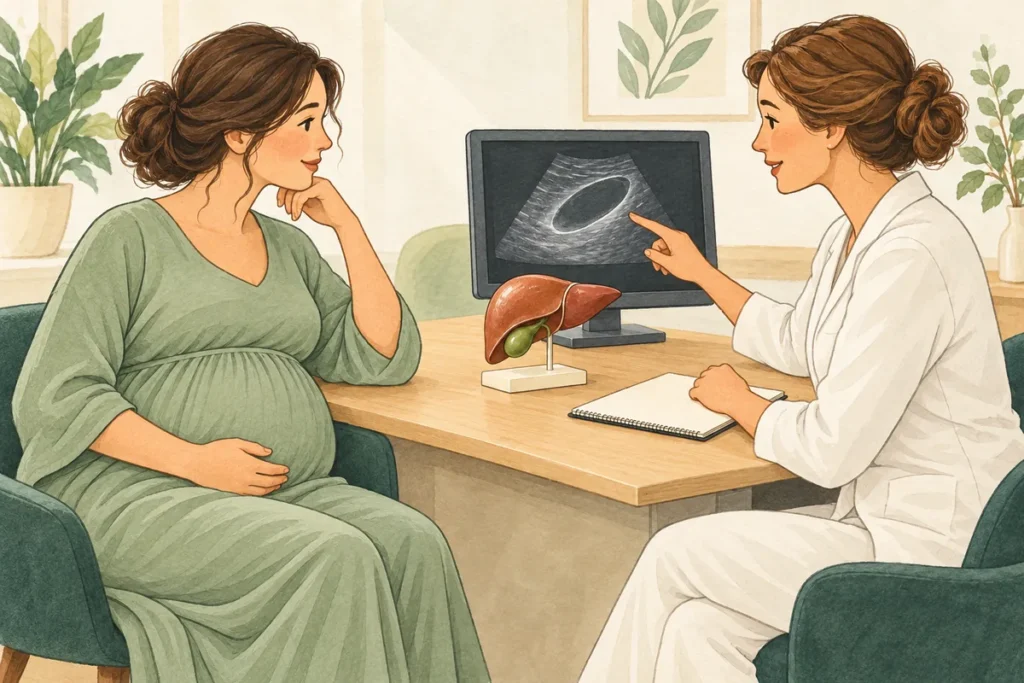
Gallstones discovered during pregnancy raise two immediate questions: are they causing the current symptoms, and does treatment need to happen before delivery? The answer depends on the diagnosis, the stage of pregnancy and your condition. A stone found incidentally calls for a different discussion from persistent pain, infection or a blocked bile duct. Pregnancy changes how care is organised, but does not mean that necessary treatment must wait.
Background on hormonal and other risk factors is covered in cholecystitis in women. This guide focuses on what happens when gallbladder problems arise during pregnancy.
When to seek urgent help
Seek urgent medical assessment for severe or persistent upper abdominal pain, particularly below the right ribs, or an attack accompanied by fever, chills, repeated vomiting or yellowing of the eyes or skin. Dark urine and unusually pale stools can also suggest impaired bile drainage. If you cannot keep fluids down or feel increasingly unwell, do not wait for a routine appointment.
Collapse, confusion or severe breathlessness require emergency help. Tell the team that you are pregnant and how many weeks along you are. Known stones do not explain every new pain. The maternity team should also assess obstetric and other causes. Severe upper abdominal pain with headache or visual changes can signal pre-eclampsia and needs immediate assessment. Pain relief or the absence of fever cannot reliably rule out a complication.
Why the exact diagnosis matters
- Biliary colic is pain caused by temporary obstruction of bile flow. It can settle when the obstruction eases, but another episode may follow.
- Acute cholecystitis is inflammation of the gallbladder. Pain tends to persist and may accompany fever, tenderness and inflammatory changes in blood tests.
- A common bile duct stone can obstruct drainage from the liver and cause jaundice. Infection in the obstructed ducts, called cholangitis, needs urgent hospital treatment.
- Gallstone pancreatitis is inflammation of the pancreas associated with a stone blocking the shared drainage area. It needs hospital assessment and treatment according to severity.
These conditions cannot be reliably separated at home from pain alone. Read more about acute cholecystitis and the relationship between pancreatitis and gallbladder disease.
What assessment usually involves
The clinician asks about the start and duration of pain, previous attacks, vomiting, fever and changes in urine or stool. Examination and blood tests help assess inflammation, liver function and possible pancreatic involvement. Bring earlier scan reports if available, but do not delay urgent care to collect them.
Ultrasound is usually the first imaging test for suspected gallstones. It uses sound waves rather than ionising radiation. If the bile ducts need a closer look, the team may consider MRCP, an MRI examination of the ducts, usually without gadolinium contrast. Ultrasound and MRI are preferred imaging options in pregnancy when they answer a clinical question. Gadolinium needs a separate risk-benefit decision. If another imaging method is necessary, its benefits and risks should be discussed rather than rejecting it solely because of pregnancy.
Who helps plan treatment
The surgical and obstetric teams assess the illness and the pregnancy together. An anaesthetist joins the discussion when an operation or endoscopic procedure is being considered; a specialist endoscopist is involved if duct treatment is needed. They decide what monitoring and hospital facilities are appropriate, including assessment of the baby according to gestational age.
Tell them about all prescribed and non-prescribed medicines, supplements, allergies and previous anaesthetic problems. Ask who will coordinate the plan and whom to contact if symptoms recur. Useful questions include: what is the confirmed diagnosis, what could happen if treatment is delayed, and what finding would change today’s recommendation? If the necessary support is unavailable locally, the team may arrange care at another hospital.
When observation may be reasonable
Stones found in the gallbladder without symptoms do not automatically require surgery during pregnancy. The clinician checks whether the finding is truly incidental and whether the ducts or gallbladder show other problems. A stone in the common bile duct needs a separate assessment.
After an uncomplicated attack has settled and complications have been excluded, observation may be discussed. A useful plan names the follow-up clinician, explains what to do during another attack and sets a time to reconsider treatment. Repeated attacks, difficulty eating or drinking and further hospital visits can shift the balance towards intervention. Symptom control leaves the stones in place, so recurrence remains possible. Do not interpret observation as advice to manage persistent pain or suspected infection at home.
When gallbladder surgery is considered
Laparoscopic cholecystectomy removes the gallbladder through small abdominal incisions. For acute cholecystitis during pregnancy, SAGES 2024 guidance favours this approach over nonoperative treatment. It also generally favours surgery for symptomatic biliary disease, while recognising circumstances in which a different plan is appropriate. The evidence is limited, so the decision needs to reflect your diagnosis and preferences.
Medically necessary surgery should not be postponed simply to reach a particular trimester or delivery. The team weighs the risk of recurrent or worsening disease against the risks of the procedure and anaesthesia. Discussion includes bleeding, infection, bile leakage, bile duct injury and possible pregnancy complications, including preterm birth. Neither surgery nor waiting can be promised to be risk-free.
Fluids, pain relief and antibiotics when indicated may be part of hospital care. Medicine choices are adapted to pregnancy and the clinical problem. Obtain individual instructions about medicines, eating and drinking before a procedure. The general laparoscopic cholecystectomy guide explains the operation; pregnancy-specific arrangements require the treating team’s plan.
What changes in the third trimester
For uncomplicated biliary colic in the third trimester, either continued nonoperative care or laparoscopic surgery may be considered. This is a narrower decision than the treatment of acute cholecystitis, cholangitis or other complications.
The number and severity of attacks, ability to maintain nutrition, remaining time to delivery, obstetric history and access to urgent care all matter. An enlarged uterus can make surgery technically more difficult. The possible consequences of preterm delivery also differ substantially depending on the week of pregnancy. If symptoms are controlled and waiting is judged reasonable, a postpartum plan should already be in place. A new complication can change that plan immediately.
When ERCP may be needed
Endoscopic retrograde cholangiopancreatography, or ERCP, can remove a bile duct stone or restore drainage. A flexible instrument passes through the mouth into the upper intestine; treatment accesses the duct from there. ERCP usually uses X-ray guidance, and the team takes steps to minimise radiation exposure.
In pregnancy it is considered when duct disease requires treatment, especially with cholangitis or ongoing obstruction. Pancreatitis alone does not mean everyone needs ERCP. Based on limited evidence and expert judgment, SAGES suggests ERCP rather than surgical duct exploration for symptomatic duct stones; experienced centres may consider alternatives.
Possible harms include pancreatitis, bleeding, infection, perforation and sedation or anaesthetic complications. ERCP does not remove the gallbladder. If a temporary stent is placed, obtain a clear plan for its removal or exchange and for subsequent gallbladder treatment. The sequence depends on the illness and pregnancy.
Following up after delivery
If treatment was deferred, arrange the surgical review discussed during pregnancy rather than waiting for another attack. Take the discharge summary, scan results and any ERCP or stent documentation. The appointment should clarify whether surgery is still recommended, its timing and any further investigations.
Discuss breastfeeding before choosing medicines or anaesthesia. Most anaesthetic exposure does not require routine discarding of milk, but the actual drugs and the baby’s health matter, particularly with prematurity. Arrange practical help with childcare and transport if surgery is planned. Advice on recovery after gallbladder removal should be adapted to postpartum recovery. Persistent pain, fever or jaundice after delivery still needs prompt assessment.
Questions and answers
Does finding gallstones on ultrasound mean I need an operation?
No. Symptom-free stones confined to an otherwise normal gallbladder usually do not require treatment. Symptoms, duct stones or abnormal findings change the discussion. Pregnancy alone is not an indication for preventive gallbladder removal.
If the pain stops, has the stone gone?
The blockage may have eased while the stone remains. Tell the clinician about the attack even if you now feel better. Continuing jaundice, fever or vomiting requires urgent assessment despite improvement in pain.
Is the second trimester the only time surgery is possible?
No. Timing depends on medical need. Necessary surgery can be considered in any trimester; a stable, uncomplicated problem may allow more choice. Ask how waiting compares with treatment in your particular situation.
What information should I bring to an assessment?
Your gestational age, pregnancy records, medicine and allergy list, earlier scan results and a brief account of attacks are useful. Note when pain started and whether you had fever or vomiting. Do not postpone emergency care to assemble documents.
Why discuss gallbladder removal after successful ERCP?
ERCP treats the bile duct problem. Stones remaining in the gallbladder can cause further attacks or enter the duct later. The team therefore makes a separate decision about gallbladder surgery and its timing.
Must I stop breastfeeding for a postpartum operation?
Usually there is no need to end breastfeeding solely because of anaesthesia. Ask for a plan covering the medicines used, when to resume feeding and any infant monitoring. Prematurity or an unwell baby may require additional precautions.